
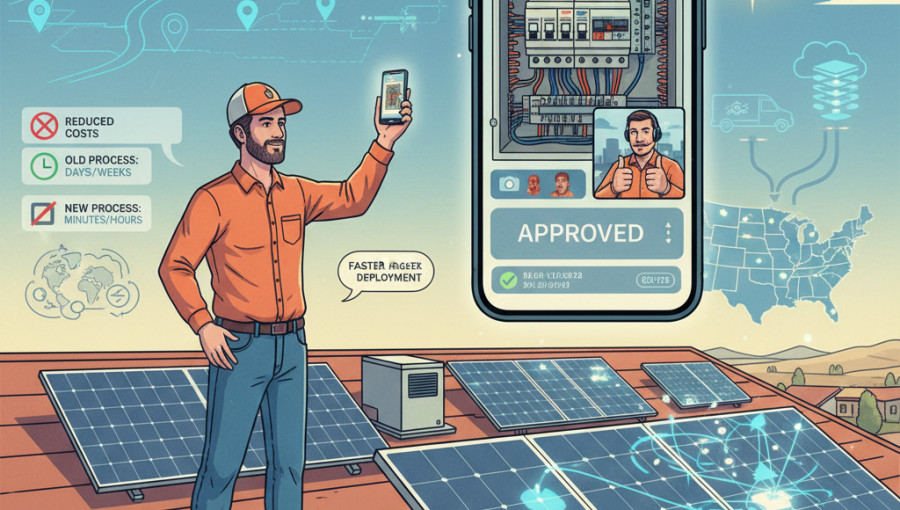
Virtual inspection technology is transforming the residential solar industry by replacing time-consuming on-site visits with remote smartphone reviews. By allowing technicians to submit photos and videos of installations, local jurisdictions are slashing approval times from days to minutes and significantly reducing operational costs. While currently adopted by a limited number of regions, new legislation in states like Maryland and California is pushing for wider implementation. This shift aims to lower the high cost of home electrification and solar panel systems by eliminating bureaucratic bottlenecks and reducing vehicle-related expenses for inspectors.
For solar inspection technicians like Chaz Weatherford, the shift to digital oversight has drastically improved daily productivity. Working for Freedom Forever in southern Arizona, Weatherford previously spent hours waiting for government officials to arrive at job sites. Now, in jurisdictions like Pima County, he uses his smartphone to document the main electrical panel, breakers, disconnect switches, and wiring. These digital records are sent instantly to the county office, where they are often approved within minutes, allowing systems to be activated much faster than under traditional methods.
The push for remote inspections comes at a time when reducing the cost of rooftop solar is a high priority. Despite rising utility bills, residential solar panel systems in the United States remain significantly more expensive than those in international markets, a situation exacerbated by the recent removal of federal tax credits. While streamlining the installation process through remote reviews is considered a top reform, only a small fraction of the 40,000 local permitting jurisdictions across the country have adopted the practice.
Legislative momentum is growing to bridge this gap. Maryland is currently moving forward with an energy package that would mandate online solar permitting by mid-2027 and require a remote inspection option if turnaround times exceed five days. Similar efforts are underway in California, Arizona, Florida, and Texas. Advocates argue that these reforms are essential to removing the “red tape” that prevents families from adopting clean energy solutions.
The economic benefits of virtual inspections are substantial. According to the Interstate Renewable Energy Council (IREC), utilizing technology can save local governments more than $30,000 per inspector annually by reducing fuel and vehicle maintenance costs. In Pima County, officials noted that inspectors previously drove up to 241 kilometers per day. By moving to remote reviews, the county has not only cut expenses but also allowed staff to focus on more complex development projects.
Beyond efficiency, remote inspections can improve safety and quality control. In Placer County, California, officials use high-resolution monitors to zoom in on technical details of a solar module or electrical conduit, often catching errors that might be missed during a brief physical visit. To prevent fraud, some jurisdictions require live video feeds to ensure the footage is being recorded at the correct job site. This approach also eliminates the safety hazard of sending inspectors onto rooftops, as they can review the installation via the contractor’s camera.
As more states consider permitting reform, the transition to virtual oversight is becoming a cornerstone of modernizing the power grid. By eliminating thousands of kilometers of unnecessary driving—estimated at over 6,276 kilometers annually in Placer County alone—the move to digital inspections aligns with broader goals of reducing CO2 emission levels while making renewable energy more accessible to the general public.