
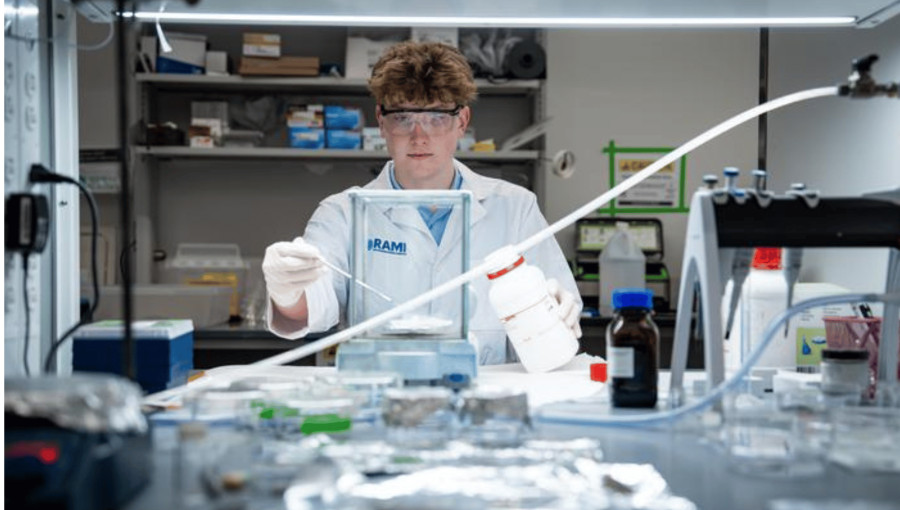
Researchers at Rice University have pioneered a groundbreaking recycling method for lithium-ion batteries that uses a water-based solution to recover critical metals in mere minutes. Unlike traditional techniques that require extreme heat or toxic acids, this new process utilizes amino chlorides to dissolve lithium, cobalt, and nickel at room temperature. This innovation addresses the growing environmental concern over battery waste by offering a faster, safer, and more sustainable alternative to current industrial practices, potentially revolutionizing how we handle the lifecycle of modern electronics and electric vehicles.
As lithium-ion batteries become ubiquitous in everything from smartphones to electric vehicles, the challenge of disposing of them sustainably has become increasingly urgent. Conventional recycling methods often rely on hydrometallurgy, which involves dissolving metals into liquids. However, these processes frequently require constant boiling or the use of hazardous chemicals, making them both energy-intensive and environmentally taxing.
The team at Rice University shifted the focus toward a more efficient chemical approach using “amino chlorides,” which are specialized salts dissolved in water. Among the various mixtures tested, hydroxylammonium chloride (HACl) proved to be the most effective. The solution features a “redox-active” center that facilitates the rapid dissolution of metals. Because the mixture is water-based rather than syrupy, molecules can move freely, significantly accelerating the extraction process compared to other experimental solvents.
Experimental results were remarkably efficient, with the solution successfully extracting approximately 65% of key metals within just sixty seconds at room temperature. Simon M. King, the study’s lead author, expressed surprise at the speed of the reaction, noting that the majority of metal extraction occurs almost immediately without the need for high-temperature environments.
Professor Pulickel Ajayan emphasized that the primary advantage of this system is its ability to operate under mild conditions. This characteristic makes the technology more scalable and environmentally friendly compared to existing industrial standards. By lowering the energy requirements and eliminating the need for harsh acids, the Rice University team is paving the way for a circular battery economy that reduces CO2 emission levels associated with manufacturing and mining.
Furthermore, the researchers demonstrated that the recovered materials could be successfully reintegrated into the production of new battery components. This breakthrough not only reduces the reliance on environmentally damaging mining operations but also provides a clear pathway for keeping valuable resources in the supply chain. According to researcher Sohini Bhattacharyya, the study highlights the fundamental chemical properties necessary for highly efficient metal leaching, offering a blueprint for future sustainable recycling technologies.