
Researchers and engineers have unveiled a groundbreaking “plug and play” inductive charging system designed to power electric vessels directly at sea. Developed through the Ocean Charger project, led by Vard and SINTEF, the technology utilizes magnetic fields to transfer electricity, eliminating the need for physical metal contacts that are prone to corrosion and wear in harsh maritime environments. This innovation allows offshore service vessels to recharge at wind farms or offshore hubs, significantly increasing operational efficiency and supporting the maritime industry’s transition toward zero-emission operations.
Charging a ship in the open ocean has long been a logistical hurdle due to salt, waves, and constant movement. However, a new magnetic charging solution aims to make this process as intuitive as placing a cup in a holder. By removing the requirement for precise physical alignment, the system ensures a stable connection even in rough weather conditions, allowing vessels to stay at sea for longer durations without returning to port.
Unlike traditional plug-based connections that suffer from mechanical wear and tear, this solution utilizes inductive power transfer. Giuseppe Guidi, a senior research scientist at SINTEF, explains that power is transferred via magnetic fields between two coils encapsulated in waterproof, salt-resistant materials. This design protects the internal components from algae and corrosion, drastically reducing maintenance costs and risks compared to bare-metal connectors.
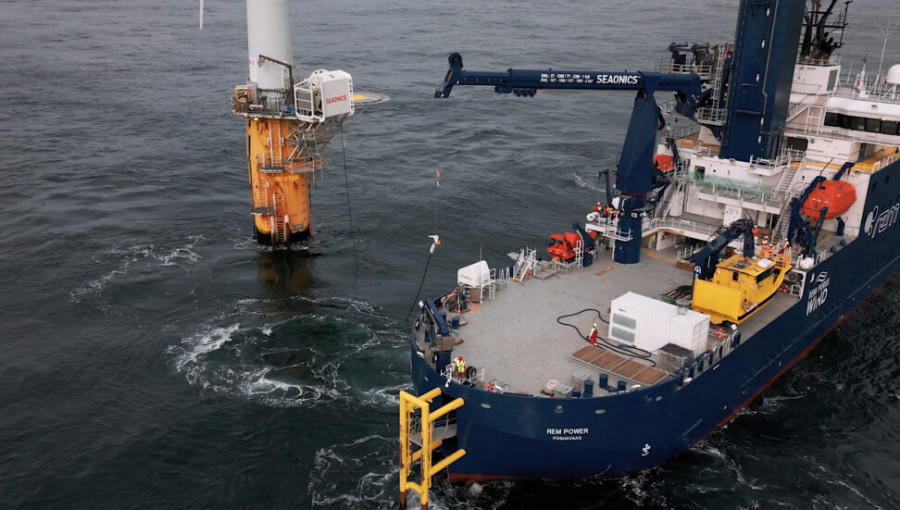
The primary beneficiaries of this technology are Service Operation Vessels (SOVs) maintaining offshore wind farms and Platform Supply Vessels (PSVs) used in the energy sector. Currently, battery-powered ships often lose a significant portion of their charge simply traveling back to port for refueling. By charging directly at offshore wind turbines or dedicated “OSS hubs,” these vessels can remain on station longer, maximizing their working hours and reducing overall CO2 emissions.
While the current prototype is compact enough to be handled manually, the full-scale version is engineered to deliver 5 MW of power. This larger iteration will be approximately three times the physical size and over fifty times heavier than the test model. To ensure efficiency matches that of traditional electrical contacts, the team developed an intelligent management system to minimize energy loss during the high-frequency power transfer process.
Håvard Vollset Lien, Director of Research and Innovation at Vard, envisions a future where charging infrastructure is established along the entire Norwegian coastline. The Ocean Charger project, supported by a broad consortium of partners including Equinor and the University of Bergen, has already submitted findings to authorities indicating that the technology is commercially ready. The final hurdles remain the establishment of commercial agreements and the physical rollout of energy access points across the shipping lanes.