Wireless Charging Breakthrough Powers Electric Ships At Sea
Engineers and researchers from the Ocean Charger project have unveiled a breakthrough inductive charging system that allows electric ships to recharge in open waters. By replacing traditional metal-to-metal connections with magnetic fields, this "plug and play" technology eliminates the risks of corrosion and mechanical wear caused by harsh maritime conditions. This innovation enables offshore vessels, particularly those servicing wind farms, to maintain continuous operations without returning to port for power, significantly boosting efficiency and supporting the maritime industry's transition toward zero-emission goals.
Charging a vessel in the middle of the ocean has historically been a logistical hurdle due to the volatile nature of the sea. Traditional electrical connectors are highly susceptible to saltwater damage and the physical stress of constant wave motion. However, a new magnetic charging plug developed by SINTEF and the maritime group Vard aims to make the process as simple as placing a cup in a cup holder. The system utilizes inductive power transfer, where energy moves through a magnetic field between two encapsulated coils, requiring no exposed metal parts.
The core of the technology lies in these waterproof coils, which are protected against salt, algae, and mechanical impact. One coil is lowered from a charging station—such as an offshore wind turbine or a dedicated hub—while the other is mounted on the ship. According to Giuseppe Guidi, a senior research scientist at SINTEF, the connection does not require surgical precision. The "plug and play" design ensures a stable power flow regardless of the vessel’s alignment, making it safer and faster than previous mechanical solutions.
While the current prototype is compact enough to be handled manually, the full-scale version is engineered to deliver 5 MW of power. This industrial-sized unit will be approximately three times larger and over fifty times heavier than the laboratory model. To achieve high efficiency, the team developed an intelligent management system that minimizes energy loss, ensuring that the wireless transfer performs at a level comparable to traditional physical contacts.
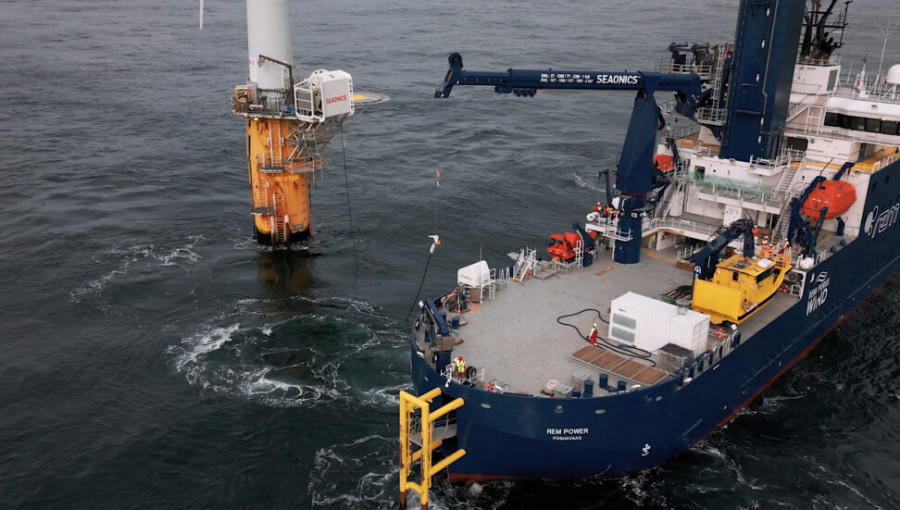
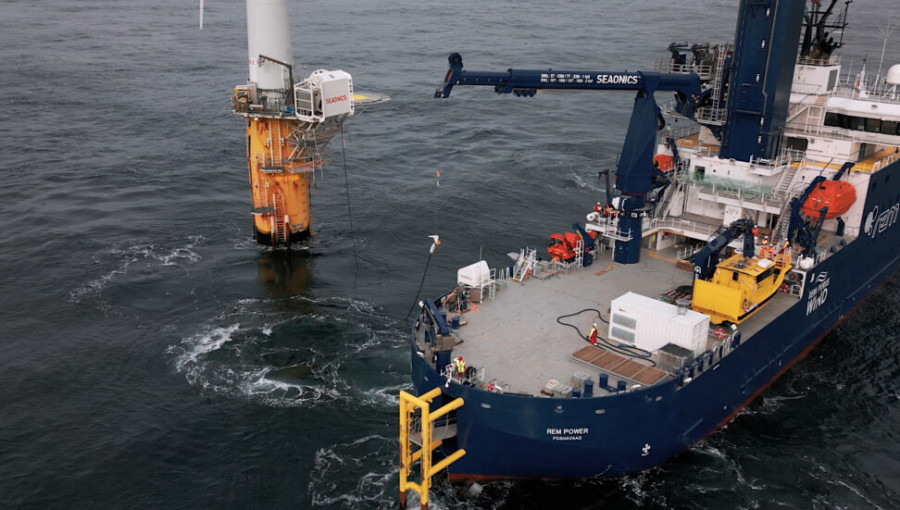
The primary beneficiaries of this technology are Service Operation Vessels (SOVs) that maintain offshore wind farms and Platform Supply Vessels (PSVs) serving the energy industry. Currently, these ships often exhaust a significant portion of their battery capacity simply traveling to and from coastal ports to recharge. By utilizing an Offshore Substation (OSS hub) to collect wind energy and transfer it directly to vessels at sea, the industry can drastically reduce energy waste and CO2 emission levels.
Håvard Vollset Lien, Director of Research and Innovation at Vard, suggests that this technology is now commercially and technologically mature. The Ocean Charger project, which involves a wide consortium of partners including Equinor and Corvus Energy, envisions a future where charging infrastructure is established along entire coastlines. This would allow a variety of coastal and service vessels to stay powered while remaining in their active shipping lanes, effectively creating a "green highway" at sea.