
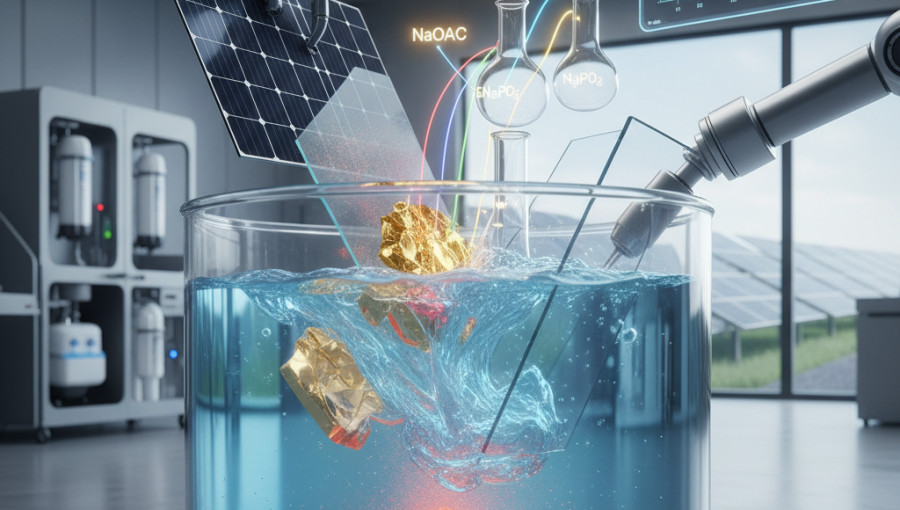
Recent breakthroughs in aqueous-based recycling strategies are paving the way for a circular economy in the perovskite solar cell industry. Research teams from China, Sweden, and the United States have developed a low-cost method to recover critical materials, including lead-containing layers and high-value electrodes, from degraded solar modules. The process allows for the fabrication of new devices that maintain comparable efficiency and stability to those made with virgin materials. With perovskite technology expected to capture a significant market share by 2035, these recycling routes address long-term environmental concerns and resource sustainability.
As the solar industry looks beyond traditional silicon, perovskite cell technology and its tandem applications with silicon PV are emerging as the next major technological leap. Industry experts anticipate that tandem solar modules could account for approximately 10% of the market by 2035. Given that perovskite modules typically have a shorter operational lifespan than mainstream silicon panels, establishing robust recycling protocols is essential for large-scale deployment. Recent demonstrations at the TaiyangNews Next-Generation PV Technology Conference highlighted that effective waste management will be a cornerstone of this transition.
The newly proposed recycling procedure begins with a brief thermal treatment, heating waste modules to 150°C for three minutes to soften the encapsulant for easier delamination. Once the layers are separated, the module is processed systematically to recover cover glass, the hole-transport layer (HTL), perovskite crystal powders, and specialized substrates. A critical challenge involves the perovskite layer itself, which contains lead. To manage this, researchers introduced three cost-effective additives—sodium acetate, sodium iodide, and hypophosphorous acid—to ensure the lead remains soluble and stable during extraction.
The recovery of the hole-transport layer, specifically spiro-OMeTAD, is achieved using ethyl acetate and ethanol, resulting in a material purity of 99.82%. High-value gold electrodes are also reclaimed through centrifugation without any negative impact on the performance of subsequent cells. Furthermore, the SnO₂-coated ITO substrates are cleaned via UV-ozone treatment to remove defects, making them ready for reuse in new solar module production.
Testing indicates that these recycled materials can undergo at least five full cycles of reuse while maintaining high performance. Cells produced after five rounds of recycling achieved a peak efficiency of 23.5%, with an average of 21.8%, proving that recycled perovskite PV can compete with new devices. This closed-loop approach not only mitigates the environmental risks associated with lead but also significantly improves the economic viability of next-generation solar technologies.