
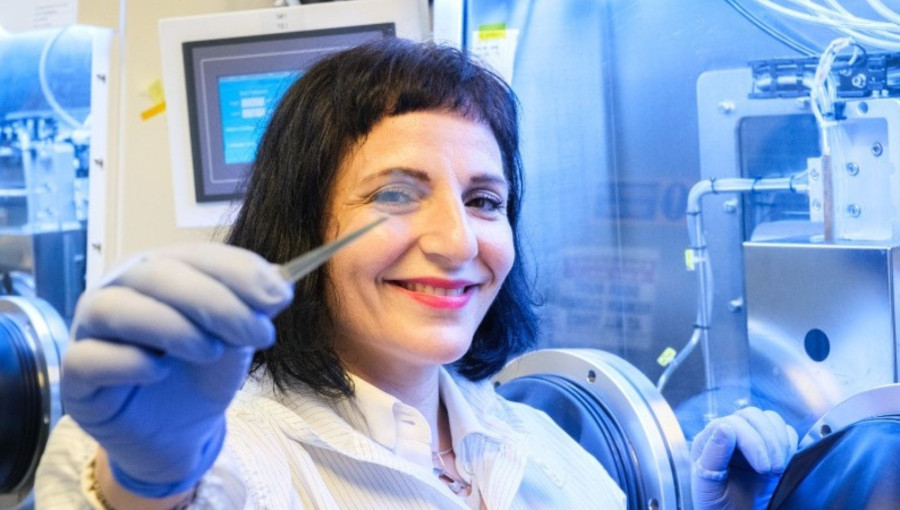
Researchers at Nanyang Technological University in Singapore have developed ultrathin, semi-transparent solar cells that could transform everyday surfaces like windows and wearable devices into power generators. Measuring roughly 10,000 times thinner than a human hair, these perovskite-based devices maintain high efficiency while remaining nearly invisible to the naked eye. By utilizing a solvent-free thermal evaporation process, the team has created a scalable method for integrating renewable energy into urban architecture and consumer electronics without compromising aesthetics or requiring additional land.
This breakthrough represents a significant step toward “invisible” energy harvesting. Unlike traditional silicon solar panels, which are bulky and opaque, these perovskite solar cells are designed to blend seamlessly into glass facades, vehicle windows, and even smart glasses. The technology allows urban structures to generate clean energy from their existing surfaces, potentially turning skyscrapers into vertical power plants.
Led by researcher Annalisa Bruno, the team achieved a thickness of just 10 nanometers for the active layers. The semi-transparent version of the device allows 41 percent of visible light to pass through while maintaining a power conversion efficiency of 7.6 percent—one of the highest recorded for this type of ultrathin technology. Because the cells are color-neutral, they do not tint the glass, making them highly attractive for architects and developers who want to maintain a building’s original design while reducing its carbon footprint.
A key advantage of this technology is its ability to function effectively under indirect or diffuse light. This is particularly useful in dense cities where tall buildings often block direct sunlight. Early estimates suggest that if scaled successfully, large office towers with glass exteriors could generate hundreds of megawatt-hours of electricity annually, significantly offsetting their internal energy demands.
The manufacturing process utilizes thermal evaporation, an industrial technique that heats materials inside a vacuum chamber until they vaporize and settle into a highly uniform thin film. This method is notably cleaner than traditional solar cell production because it avoids the use of toxic solvents. This environmental benefit, combined with the uniformity of the resulting films, simplifies the path toward large-scale industrial production.
While the initial results are promising, the research team is now focused on improving the long-term durability and stability of the cells. Independent experts have noted that proving the technology can withstand years of environmental exposure is the final hurdle before commercial deployment. The NTU team has already filed a patent for the technology and is working with industry partners to refine the production process for larger surfaces. The findings were recently published in the journal ACS Energy Letters.
