
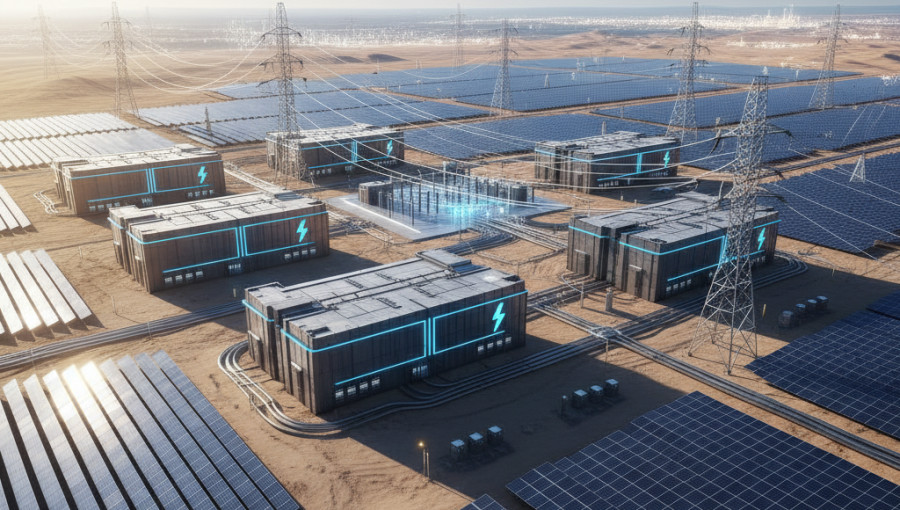
The United States power grid is better prepared for the upcoming summer heat than in previous years, according to a recent reliability assessment from the North American Electric Reliability Corp. While record temperatures are expected, the grid has been bolstered by a significant influx of new solar and battery storage capacity. These renewable resources have proven more effective at ensuring reliability than the aging fossil-fuel plants that the current administration has attempted to keep online. Consequently, many regions previously considered at risk of electricity shortfalls have moved to a normal risk status for 2026.
The North American Electric Reliability Corp. (NERC) report highlights that the addition of 30.5 gigawatts of solar generation and over 16 gigawatts of battery capacity since last summer has been the primary driver of grid stability. These additions far outpaced the 7 gigawatts of new natural gas generation. NERC’s assessment did not even factor in the fossil-fuel plants that the Department of Energy recently forced to remain operational, suggesting that these older units are not essential to maintaining grid reliability during peak summer demand.
While the overall outlook is positive, some areas, including New England, the Pacific Northwest, West Texas, and parts of Canada, still face potential electricity shortfalls if extreme heat drives up air-conditioning demand. However, this represents a marked improvement from the summer of 2025, when six U.S. regions were flagged for elevated risk. The transition to a more stable grid is largely attributed to the high peak-hour contribution of solar and battery systems, which provide reliable power when it is needed most.
Experts note that solar and battery storage are not only faster and cheaper to deploy than traditional gas plants but are also significant contributors to reducing system risk. In regions like the Midwest, solar installations are providing 60% of their nameplate capacity during peak hours, while battery storage systems are contributing as much as 97%. This data reinforces the conclusion that renewable energy resources are essential to modern grid reliability, contradicting arguments that prioritize the maintenance of outdated coal and gas infrastructure.