New Biodegradable Generator Harvests Electricity From Ambient Humidity
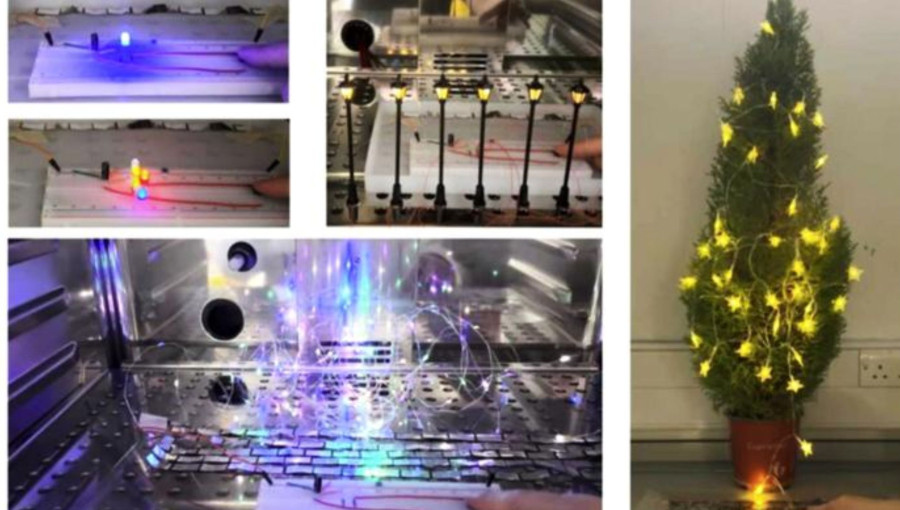
Researchers from Queen Mary University of London, the University of Warwick, Imperial College London, and Universitas Mercatorum have engineered a biodegradable Moisture-Electric Generator (MEG) that produces stable power from ambient humidity. Constructed from gelatin, table salt, and activated carbon, this device offers a sustainable alternative to traditional batteries, which often rely on heavy metals and plastics. By harvesting moisture from the air or human skin, a single unit provides a continuous 1-volt output. When connected in series, the system can reach 90 volts, demonstrating a scalable, eco-friendly solution for powering wearable sensors and remote environmental monitoring nodes.
The development addresses the growing challenge of electronic waste by utilizing non-toxic, water-based manufacturing processes. As the gelatin-salt solution dries, it forms a three-layered structure that facilitates ion movement when exposed to moisture, effectively converting atmospheric humidity into electricity. This self-organizing architecture allows the device to function for over 30 days, providing enough power to illuminate a 40-light LED string. Because the materials are fully biodegradable, the generator can safely dissolve in water or decompose in soil within weeks, supporting the transition toward circular electronics and reducing the environmental impact of disposable power sources.
Beyond its energy-harvesting capabilities, the MEG functions as a highly sensitive, skin-compatible sensor. Its electrical output fluctuates in response to subtle changes in moisture, allowing the device to monitor breathing patterns, capture speech through exhaled humidity, and facilitate touchless proximity sensing. These features make the technology particularly well-suited for wearable health monitors and human-machine interfaces that require long-term operation without the need for battery replacements. By proving that high-performance energy devices can be created from simple, low-cost components, the research team has established a viable path for integrating sustainable power into the next generation of electronic sensors.