
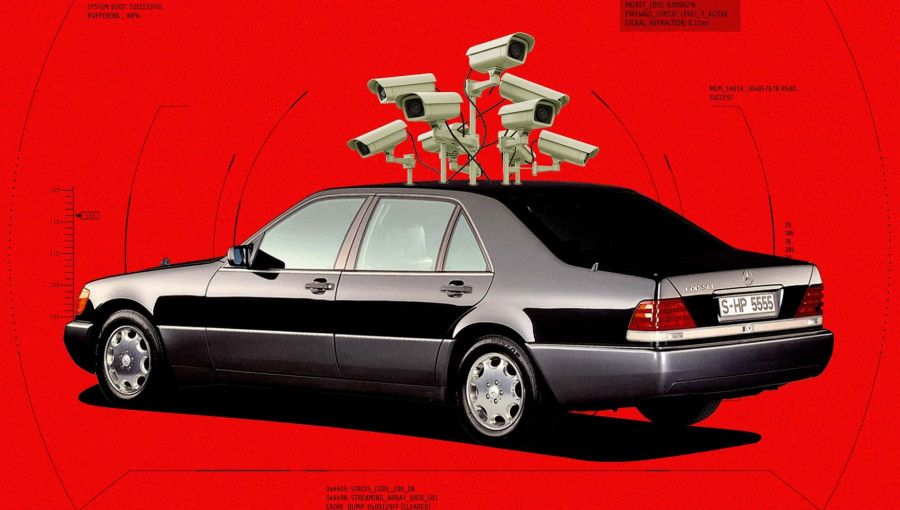
The history of autonomous vehicles predates modern Silicon Valley tech giants by decades, rooted in a series of experimental projects across Japan, Europe, and the United States. While contemporary companies often dominate the conversation, the foundation for self-driving technology was laid by university researchers and military-funded programs. From early vision-guided test vehicles in the 1970s to complex highway navigation experiments in the 1990s, these efforts collectively advanced the ability of machines to perceive and adapt to their surroundings. Today’s systems remain a blend of driver assistance and evolving autonomy, continuing a long-standing quest to automate the driving experience.
The journey toward autonomous mobility began in 1977 at Japan’s Tsukuba Mechanical Engineering Laboratory, where researchers developed a vehicle that used roof-mounted cameras to follow road markings. Although limited to a closed track and speeds under 20 mph, it proved that a car could operate without remote control. By the 1980s, the focus shifted to Germany, where Ernst Dickmanns and his team at the University of the Bundeswehr Munich introduced the VaMoRs project. Using a Mercedes-Benz van, they achieved speeds of 60 mph on a closed autobahn, eventually evolving the technology to handle lane changes and obstacle detection.
This research culminated in the Eureka PROMETHEUS project, a massive collaboration involving over 600 companies. By 1994, test vehicles were navigating busy Parisian highways at speeds of 80 mph, monitoring traffic up to 330 feet away. The project’s peak occurred in 1995 when a vehicle drove autonomously for 1,000 miles between Munich and Denmark, reaching speeds of 112 mph. While these systems struggled with complex environments like construction zones, they paved the way for production features like adaptive cruise control.
In the United States, development followed a different path, driven by university labs like Carnegie Mellon’s Navlab and government initiatives. The National Automated Highway System attempted to modernize infrastructure, though it struggled to define its goals. The most significant catalyst for American progress was the DARPA Grand Challenge, which pushed robotics to navigate difficult desert terrain and later, urban environments. These competitions transformed autonomous development from a niche academic pursuit into a software-focused industry. While modern companies have successfully commercialized these concepts, the current landscape of robotaxis and driver-assistance systems is the result of decades of incremental global innovation.