
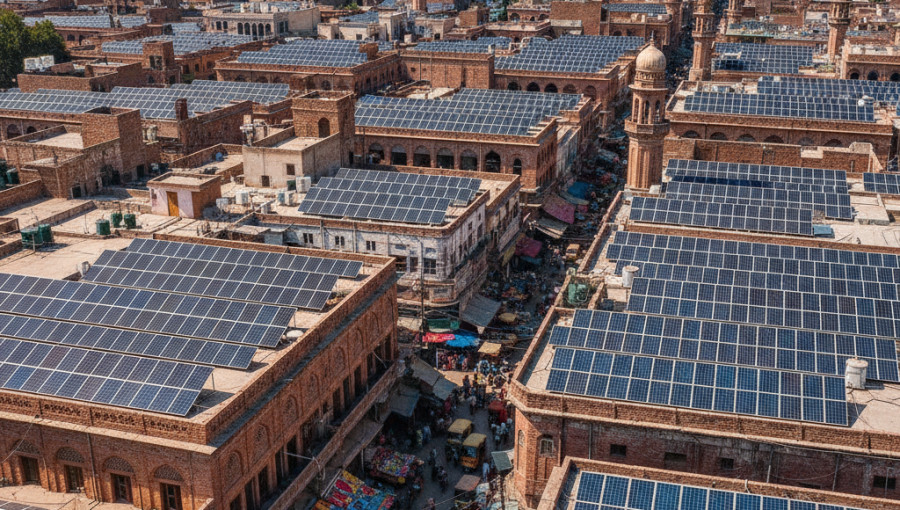
Pakistan is currently experiencing an unprecedented, unplanned solar energy revolution. In 2025, the country became the world’s second-largest importer of solar panels, with distributed rooftop solar capacity reaching an estimated 33 GW. Unlike transitions in other nations driven by government mandates or subsidies, this surge was fueled by millions of households and businesses seeking independence from an unreliable, expensive national grid. While this rapid adoption has established solar as the country’s primary electricity source during peak months, it has also triggered a financial crisis for utility providers, illustrating the complex challenges of an unmanaged energy transition.
For decades, Pakistan’s power sector has been plagued by load-shedding and high costs. Despite having a capacity surplus, the grid remains inefficient, burdened by expensive imported fuels and massive “circular debt” resulting from unpaid bills and capacity payments to idle power plants. As electricity tariffs tripled over the last decade, consumers faced a choice between paying high prices for unreliable service or investing in private solar modules. With the global collapse of solar panel prices, residential and industrial users increasingly opted for self-generation, viewing rooftop systems as a necessary hedge against frequent, lengthy power outages.
This mass migration to distributed solar has created a “utility death spiral.” As wealthier consumers and businesses exit the grid, the fixed costs of maintaining the national infrastructure fall on a shrinking base of remaining users, leading to further price hikes and more solar adoption. In response, the regulator, NEPRA, recently shifted from a net-metering system to a less favorable net-billing model to discourage the exodus. While this move aims to protect the financial viability of the grid, it highlights the tension between private energy resilience and the need for a stable, shared national power system.
Despite these systemic risks, the solar boom offers significant benefits. Beyond providing energy security for those already connected, the influx of affordable solar technology is helping to bridge the electricity access gap for the millions of Pakistanis who previously lacked any grid connection. Pakistan’s experience serves as a global preview for developing nations with growing energy demands and aging infrastructure. It demonstrates that when grid reliability fails and solar costs plummet, private investment can drive a rapid energy transition, provided that policymakers can successfully adapt their institutions to manage the shift toward decentralized power.