
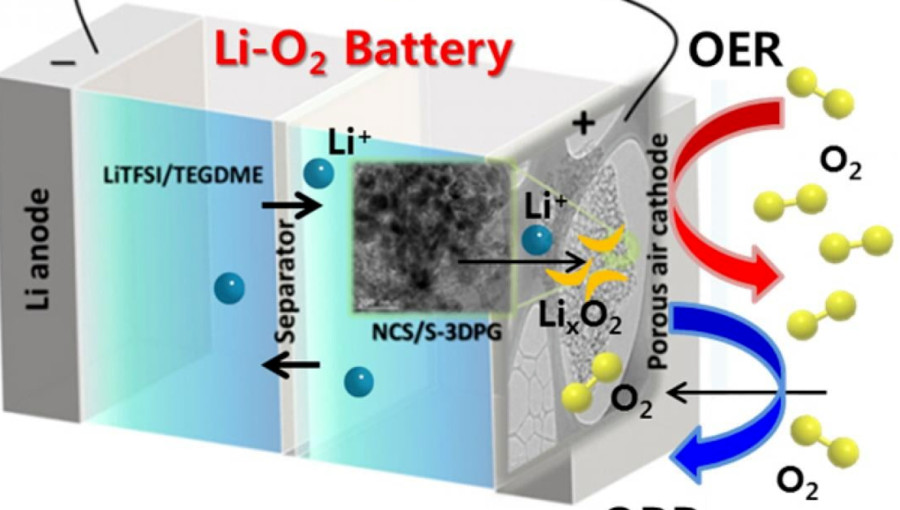
CATL, the world’s leading battery manufacturer, is setting its sights on lithium-air technology as a long-term solution for future energy storage. During the 2026 Powering The Nation forum, chief scientist Wu Kai highlighted the company’s interest in this technology, which boasts a theoretical energy density of 12,000 Wh/kg—a figure comparable to gasoline. By utilizing lithium metal as an anode and oxygen from the air as a cathode reactant, these “breathable batteries” aim to drastically reduce weight and complexity compared to traditional lithium-ion cells, potentially enabling electric vehicles to travel over a thousand miles on a single charge.
While lithium-air technology has been studied since the 1970s, it has historically struggled with moisture sensitivity, carbon dioxide interference, and limited cycle life. Recent advancements have begun to overcome these hurdles. In 2025, researchers from Argonne National Laboratory and the Illinois Institute of Technology successfully developed a prototype achieving 1,200 Wh/kg with a 1,000-cycle lifespan at room temperature. This breakthrough was made possible by facilitating a four-electron chemical reaction pathway that forms and decomposes lithium oxide, significantly boosting energy storage capacity compared to earlier designs that were limited by lithium peroxide formation.
To improve safety and durability, researchers have replaced flammable liquid electrolytes with a solid-state composite matrix. This layer, composed of a ceramic-polyethylene oxide polymer infused with lithium-rich nanoparticles, stabilizes the cells and prevents leaks during high-energy operations. CATL is currently pursuing a multi-tiered development strategy. The company continues to rely on mature technologies like NMC, LFP, and sodium-ion for current market needs, while positioning solid-state batteries as a medium-term objective. Lithium-air technology remains a primary focus for the company’s research and development efforts looking toward 2030 and beyond.