
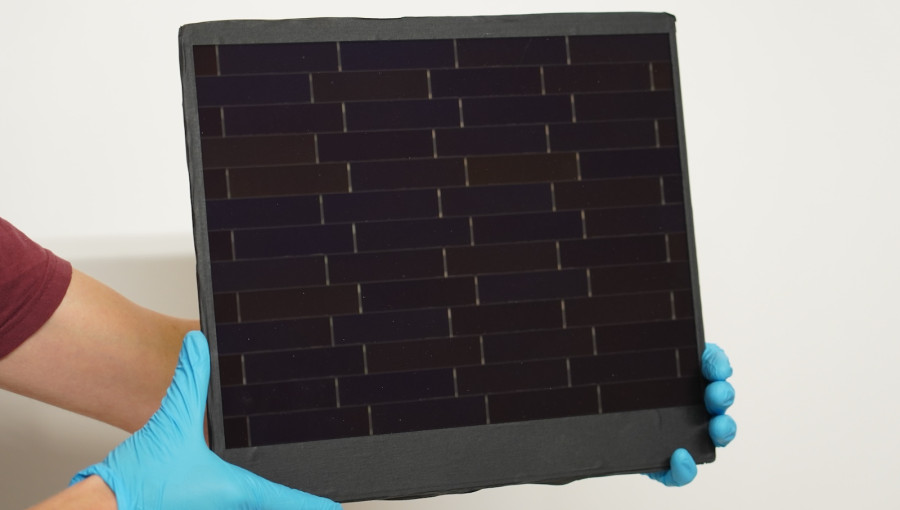
The Fraunhofer Institute for Solar Energy Systems (ISE) has established a new global benchmark for solar technology, achieving a record-breaking 34.4 percent efficiency with its latest III-V germanium photovoltaic module. This accomplishment follows a previous record of 34.2 percent set earlier in 2026 by the same research team. By refining interconnection techniques and adapting space-grade cell technology for terrestrial use, the institute has demonstrated significant advancements in module performance. The record-setting unit will be on display at the upcoming Intersolar / The Smarter E 2026 event, showcasing the potential for future high-efficiency solar energy production.
The project, known as “Vorfahrt,” utilized triple-junction III-V germanium solar cells originally designed for space exploration. Researchers at AZUR SPACE Solar Power adapted these cells to suit the terrestrial solar spectrum, ensuring they could be manufactured using standard wafer formats and quantities. The jump from the previous record to the current 34.4 percent efficiency was made possible by implementing shingled matrix technology to interconnect the cells. This method, developed in collaboration with a German mechanical engineering partner, is already utilized in some commercial modules produced within Germany.
Unlike traditional photovoltaic construction that relies on solder-coated copper ribbons, the shingle-matrix approach involves cutting solar cells into narrow strips and overlapping them in an offset pattern. These strips are joined using electrically conductive adhesives, which allows for direct cell-to-cell contact. By removing the need for traditional interconnects, the design eliminates the shading of active cell areas. This increased area utilization was instrumental in reaching the new efficiency milestone. The module, which measures 833 square centimeters, features anti-reflective coatings provided by temicon to further enhance its performance.