
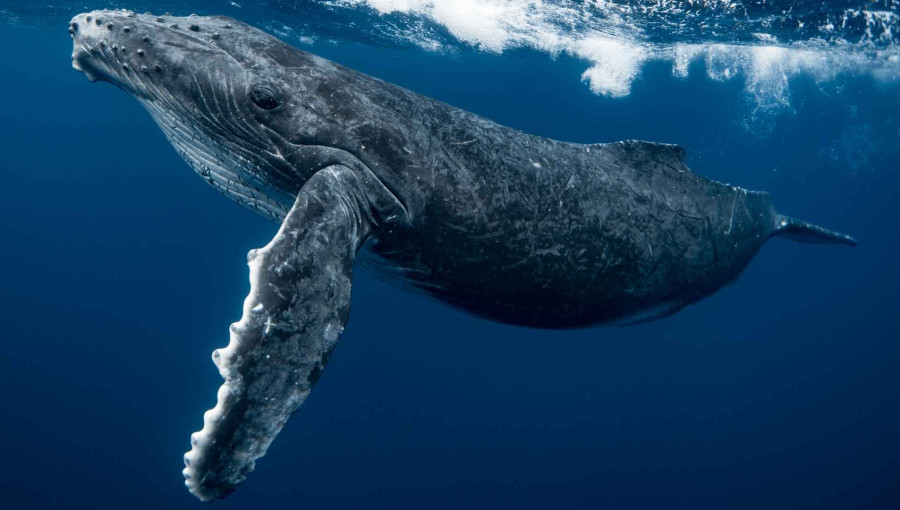
Engineers are looking to the humpback whale to improve the efficiency of wind turbine blades. Despite their massive size, these whales exhibit remarkable agility due to tubercles, which are bumpy ridges along their flippers. Marine biologist Frank Fish discovered that these bumps channel water into vortices, preventing stalls during sharp maneuvers. By applying this biological design to wind turbine blades, researchers have found that turbines can capture energy in lighter winds. While manufacturing complexities and maintenance concerns remain, this biomimicry could significantly boost power output and stability for the renewable energy sector in the future.
The aerodynamic secret of the humpback whale lies in how its tubercles manipulate fluid flow. On a smooth surface, water or air flowing at a steep angle tends to become turbulent, leading to a loss of lift. The bumps on a whale’s flipper split the flow into smaller, controlled channels, keeping the fluid attached to the surface even at extreme angles. This prevents the stalling that would typically occur with such large appendages, allowing the whale to maintain control and maneuverability while swimming.
Translating this concept to wind energy involves adding similar ridges to the leading edge of turbine blades. Traditional blades are designed to be smooth, but they often struggle to generate power in low-wind conditions. By incorporating whale-inspired bumps, the blades can operate at steeper angles, allowing them to begin rotating and producing electricity in much lighter breezes. Testing indicates that this design can increase aerodynamic efficiency by up to 20 percent. Furthermore, the ridges provide additional stability, which helps the turbines run more quietly and reduces the mechanical stress caused by sudden wind gusts.
Despite these performance gains, the transition to bumpy blades faces practical obstacles. Current manufacturing processes rely on smooth, simple molds, and adding complex ridges increases both production costs and technical difficulty. There are also concerns regarding long-term maintenance, as the gaps between the ridges could accumulate ice, dirt, or insects, potentially hindering performance. Currently, the technology has found a successful niche in industrial ceiling fans, which benefit from increased airflow and reduced energy consumption. As production techniques evolve, these biomimetic designs may eventually become a standard feature on wind farms, demonstrating how nature continues to influence modern engineering.