
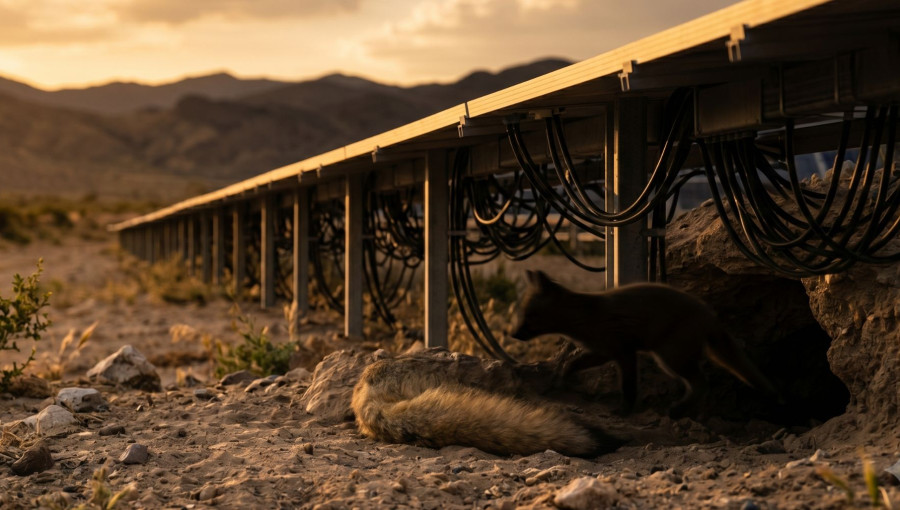
The San Joaquin kit fox, an endangered species facing severe habitat loss in central California, has found an unexpected sanctuary within the confines of a large-scale solar farm. While these industrial sites were originally designed solely for energy production, researchers discovered that the infrastructure provides essential protection for the foxes. By offering shelter from predators and a stable environment for raising pups, the solar facility has transformed from a perceived “dead space” into a vital nursery. This discovery challenges long-held assumptions about the conflict between renewable energy infrastructure and wildlife conservation, suggesting new possibilities for coexistence.
For years, the expansion of solar energy has raised concerns regarding land use and the displacement of local wildlife. The Panoche Valley, once a sprawling landscape, saw the construction of a 500-hectare solar farm that many feared would further isolate the kit fox. However, a three-year study conducted by California State University revealed that these animals adapted to the site by utilizing the perimeter fencing as a barrier against coyotes. The shade provided by the solar modules created a cooling effect, while the ground beneath the arrays supported a steady supply of prey, such as rodents and insects.
The findings indicate that the foxes not only used the solar farm as a daytime refuge but also established dens and successfully raised litters beneath the panels. Data showed that the survival and breeding rates of foxes within the solar site were comparable to those living in nearby wild habitats. This success highlights the importance of thoughtful design, including wildlife-friendly fencing and native planting, in mitigating the environmental impact of energy infrastructure. While a solar farm cannot fully replicate a natural ecosystem, it has provided a crucial second chance for a species that had nearly run out of options.