
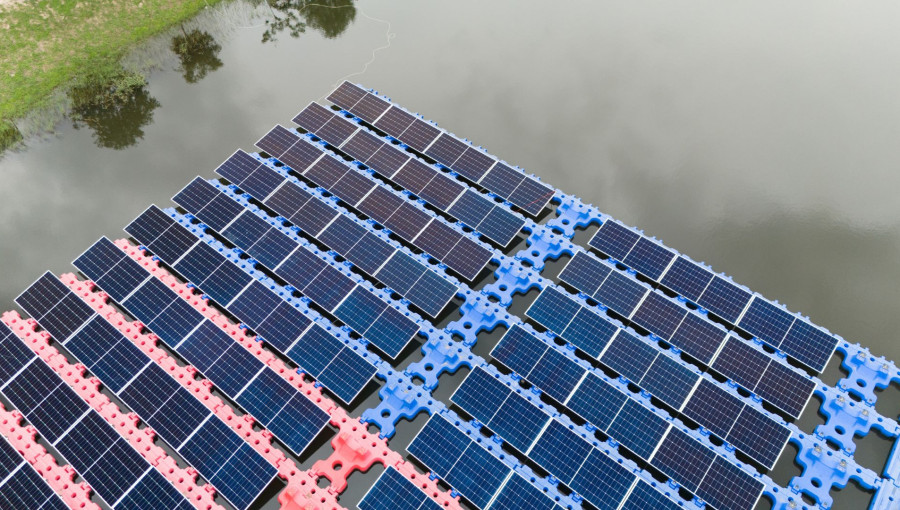
Researchers at Western University in Canada have successfully demonstrated a foam-backed floating photovoltaic (FPV) system capable of operating in freezing conditions. Tested in an Ontario stormwater pond, the array generated 7.7 megawatt-hours of electricity over one year, outperforming standard floating solar models by approximately 2.7 percent. By utilizing flexible solar panels mounted on waterproof foam and an underwater air-bubbler system to prevent ice accumulation, the design proves that floating solar technology can remain viable in cold climates. Furthermore, the system helps conserve water by reducing evaporation, offering a dual-purpose solution for renewable energy and agricultural resource management.
The primary challenge for floating solar in colder regions has been the threat of thick, shifting ice, which can destroy traditional plastic pontoon structures. To address this, the research team developed a design that attaches flexible solar panels directly to thick foam sheets, which minimizes wind resistance. To protect the array from freezing, they installed a shore-based pump that pushes air bubbles from the pond floor. This process brings warmer water from the depths to the surface, effectively acting as a localized defroster that keeps the water surrounding the panels clear even during harsh winter storms.
The energy cost of maintaining this ice-free zone is remarkably low, consuming only 0.02 percent of the total electricity produced by the array. Even during peak winter conditions, the system maintained high efficiency, with energy yields dropping by only 14.5 percent. Beyond power generation, the flat, foam-backed structure serves as a physical barrier that blocks sunlight and wind, significantly curbing evaporation. The study suggests that if the array covered half of the test pond, it could save roughly 927 cubic meters of water annually, providing a vital resource for local agricultural irrigation.
Following these successful results, which were published in the journal Applied Energy, the research team is now planning to scale the technology for use on larger and more diverse bodies of water. By proving that floating solar can survive and thrive in freezing temperatures, this innovation offers a promising path for expanding renewable energy infrastructure into regions previously considered unsuitable for such projects. The findings highlight the potential for foam-based FPV platforms to serve as an adaptable, efficient, and water-conserving solution for sustainable energy generation.