Breakthrough Sodium Ion Battery Eliminates Thermal Runaway Risk
Researchers at the Chinese Academy of Sciences have developed a breakthrough sodium-ion battery capable of eliminating the risk of thermal runaway. By utilizing a specialized polymerizable non-flammable electrolyte, the battery creates an internal "smart firewall" when temperatures exceed 150°C. This chemical reaction prevents the catastrophic chain reactions that typically lead to fires or explosions. Testing demonstrated that the cell remains stable even at 300°C while maintaining a competitive energy density of 211 Wh/kg, offering a safer alternative for electric vehicles and large-scale energy storage systems.
Thermal runaway remains a primary safety hurdle for modern battery technology, often resulting in uncontrollable heating, gas venting, and explosive failures in lithium-ion systems. To address this, a team led by Professor Yong-Sheng Hu at the Institute of Physics has engineered a self-protecting electrolyte designed to physically halt overheating before it escalates.
The technology centers on a polymerizable non-flammable electrolyte (PNE) that acts as a reactive safety mechanism. When the internal temperature of the cell reaches 150°C, the liquid electrolyte undergoes a rapid phase change, solidifying into a dense physical barrier. This transformation effectively cuts off heat propagation and stops side reactions between electrodes, preventing the temperature spikes that characterize battery failure.
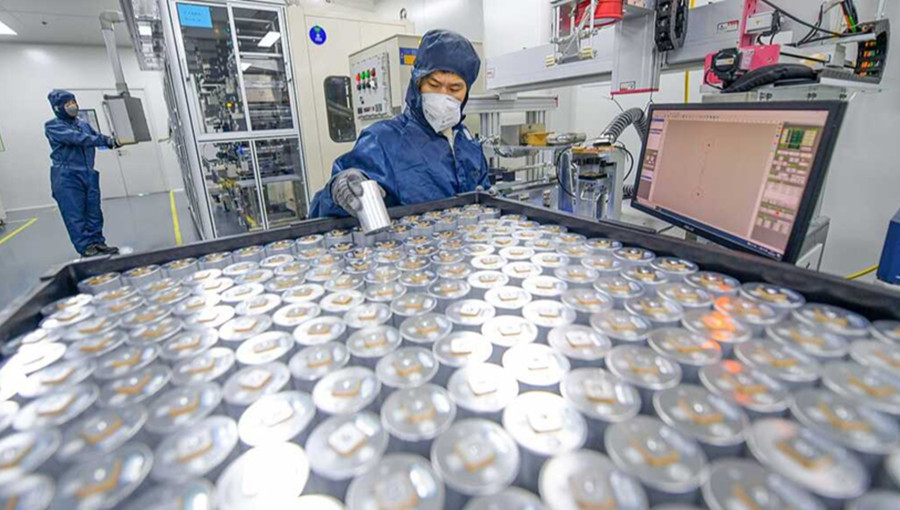
In experimental trials involving a 3.5-ampere-hour cylindrical sodium-ion cell, the battery successfully withstood temperatures up to 300°C without experiencing thermal runaway. The researchers also subjected the unit to a rigorous nail penetration test—a standard industry simulation for internal short circuits—where it exhibited no smoke, fire, or explosive activity.
Beyond its safety features, the battery maintains high performance standards. It boasts an energy density of 211 Wh/kg and operates reliably across a broad temperature range, from -40°C to 60°C. Furthermore, the system remains stable at voltages exceeding 4.3 V, making it a viable competitor to high-capacity lithium-ion cells.
The study, published in the journal Nature Energy, suggests that this innovation could significantly accelerate the adoption of sodium-ion technology. By providing a robust safety profile, these batteries are positioned as a transformative solution for heavy-duty trucking, the electric vehicle sector, and massive grid-scale energy storage projects.