Brooklyn Launches Innovative Electric School Bus Charging Pilot
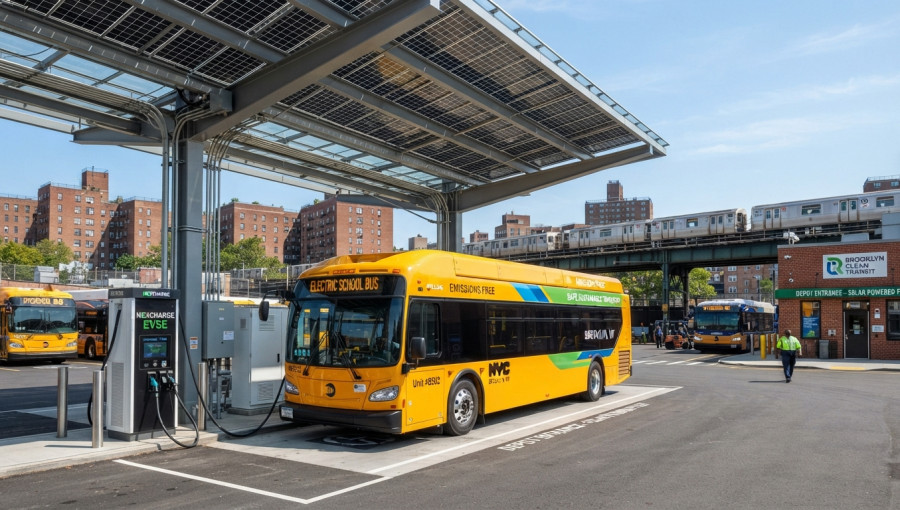
New York City is advancing its transition to sustainable transportation with a new fleet of electric school buses in Brooklyn. As school districts nationwide face rising diesel costs, a $9 million pilot project between First Student and Con Edison has introduced ten battery-powered buses in East New York. By utilizing an innovative aboveground charging infrastructure, the project avoided costly underground utility lines, saving time and money. This initiative serves as a critical model for replacing diesel fleets with cleaner alternatives while exploring vehicle-to-grid technology to enhance urban power grid reliability and reduce long-term operational expenses.
The East New York depot features high-powered charging cabinets connected via aboveground conduits, a design necessitated by the presence of underground jet-fuel lines serving John F. Kennedy International Airport. This modular approach allows for scalable charging capacity and reduced construction timelines. First Student plans to add 40 more electric buses to the site by June, with future phases focusing on vehicle-to-grid capabilities. This technology will allow the buses to feed stored energy back into the grid, potentially helping to manage peak electricity demand during hot summer months when air conditioning usage strains the city’s infrastructure.
Environmental and health considerations remain central to the project, as residents in East New York and the South Bronx suffer from high rates of respiratory issues linked to tailpipe emissions. To further support sustainability, some buses are equipped with 3-kilowatt solar arrays on their roofs to supplement battery power. First Student is also exploring the installation of a 500-kW rooftop solar system and a 2-MW battery at the site. These efforts align with broader national trends, as the number of electric school buses in the U.S. has grown significantly due to increased funding and health concerns.
While New York state has extended its deadlines for transitioning to zero-emission school buses to 2040, projects like this remain vital for overcoming logistical hurdles. Despite the higher upfront costs of electric models compared to diesel, the pilot demonstrates how utility coordination and innovative infrastructure can make electrification more cost-effective. With support from state incentive programs, the initiative provides a practical roadmap for other districts to navigate the complexities of charging, route management, and grid integration, ultimately moving the city closer to a fully emissions-free student transportation system.