China Pioneers Recycling Solutions For Aging Renewable Energy
China is addressing the environmental challenge of aging renewable energy infrastructure as its massive wind and solar installations reach the end of their operational lives. With combined capacity recently surpassing thermal power, the nation faces a looming waste crisis involving millions of tonnes of decommissioned equipment. In response, state-owned CHN Energy is pioneering large-scale recycling initiatives and establishing industry standards to ensure a "closed-loop" lifecycle for clean energy. This effort aims to transform the "last mile" of green power into a sustainable circular economy, preventing retired hardware from becoming a long-term waste burden.
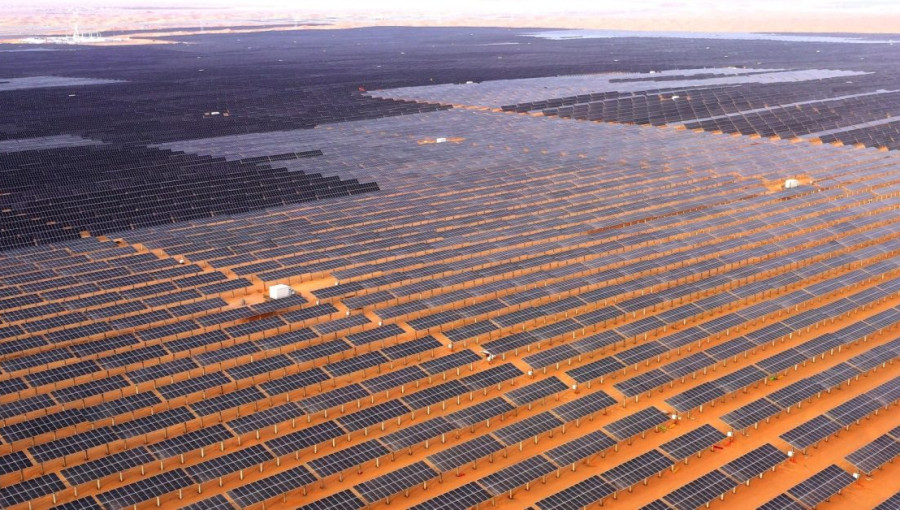
As of March 2025, China’s renewable energy sector reached a historic milestone, with total wind and solar capacity exceeding 1.48 billion kilowatts. This figure marks the first time green energy sources have overtaken thermal power in the country's energy mix. However, the rapid expansion of the past two decades has brought a significant logistical hurdle: the disposal of aging equipment. Most solar panels and wind turbines are designed for a 20- to 25-year lifespan, meaning the earliest waves of China’s clean energy boom are now nearing retirement.
The scale of the impending waste is substantial. Projections suggest that decommissioned solar panels in China will reach approximately 20 million tonnes by 2050, while retired wind turbine blades are expected to total 3 million tonnes by 2035. To address this, China Energy Investment Corporation (CHN Energy)—the world’s largest wind power operator—has focused on the "last mile" of the green transition. The company, which manages nearly 10% of China’s total renewable capacity, is leading the charge in developing industrial-scale recycling solutions.
In October 2025, CHN Energy’s subsidiary, Longyuan Environmental Protection, launched a high-capacity solar module recycling demonstration line. A new branch in Zhangjiakou is slated to begin operations this year, with the capability to process over 10,000 tonnes of decommissioned wind and solar hardware annually. To put this into perspective, this volume is equivalent to the weight of roughly 10,000 small cars. This facility represents a critical step in moving beyond simple power generation toward a comprehensive waste management strategy.
Beyond physical infrastructure, the initiative is shaping the regulatory landscape. Longyuan Environmental Protection has established a dedicated recycling committee within the China Association of Circular Economy and has contributed to the drafting of 17 international and national standards for the sector. Hou Bo, deputy general manager of the firm, emphasized that authentic green development requires more than just low-carbon electricity; it necessitates a closed-loop system where equipment is fully integrated into a circular economy at the end of its life.
China’s approach serves as a potential blueprint for other nations grappling with the same transition. As the global renewable energy buildout continues to accelerate, the ability to recycle complex materials like solar cells and composite turbine blades at scale will be essential to maintaining the environmental integrity of the clean energy movement. Sharing these technological advancements and best practices will be vital for ensuring that the global shift away from fossil fuels remains truly sustainable.