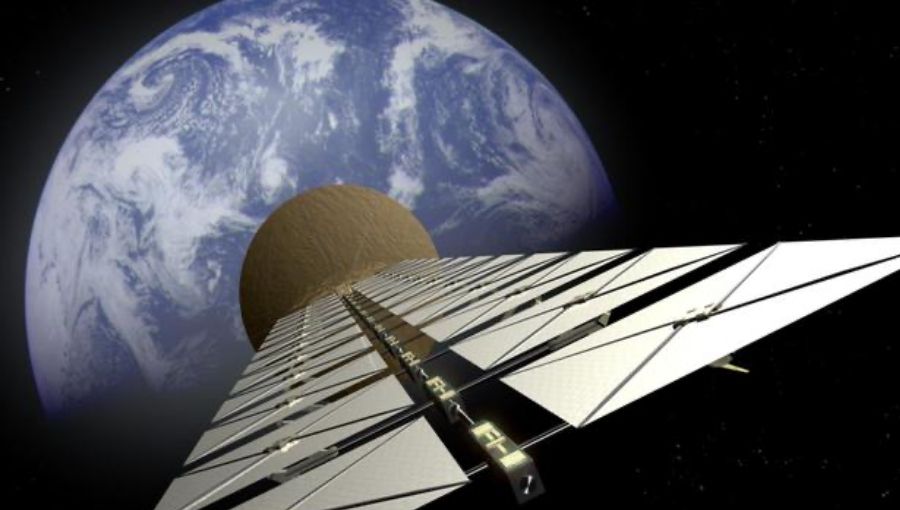
China Tests Perovskite Solar Cells Aboard Space Station
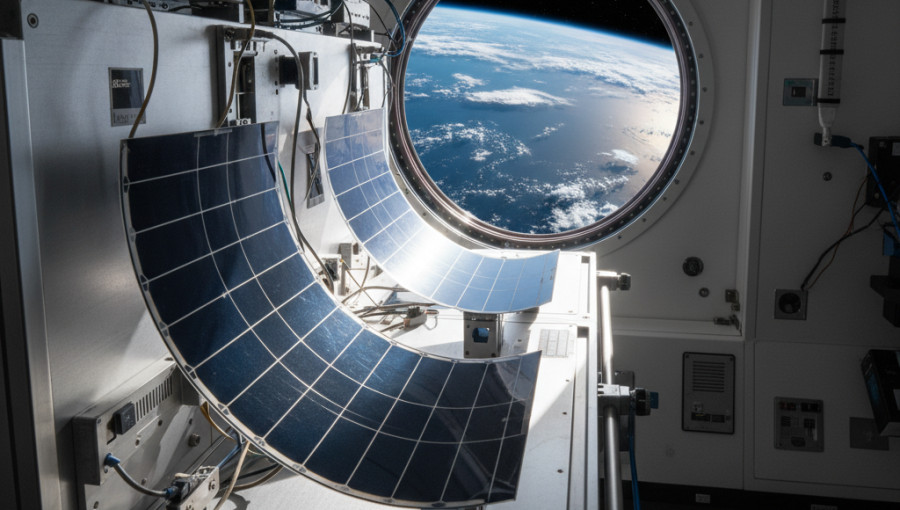
The upcoming Shenzhou-23 mission will transport perovskite solar cell technology to the China Space Station to assess its durability in low-Earth orbit. Researchers from the Chinese Academy of Sciences’ Institute of Semiconductors have developed both single-junction and tandem solar cell samples for this experiment. By exposing these materials to intense UV radiation, atomic oxygen, high-energy particles, and extreme temperature fluctuations, scientists aim to evaluate the performance of these lightweight, flexible devices. The findings will be critical for developing high-efficiency, cost-effective power systems for future space infrastructure, including satellites, deep-space missions, and potential lunar energy installations.
The mission focuses on testing how perovskite architectures withstand the rigorous environment of space. These materials are particularly attractive for space applications due to their high absorption coefficients, low-temperature manufacturing processes, and superior specific power capabilities. By utilizing thin and flexible form factors, the technology offers a promising alternative to traditional power systems, potentially reducing the mass and complexity of solar arrays deployed in orbit.
Data gathered during the Shenzhou-23 campaign will provide a comprehensive look at how combined stressors, such as severe thermal cycling and constant radiation, impact the longevity and efficiency of perovskite PV. This research is intended to inform the design of next-generation power solutions, ensuring that future space station arrays and deep-space hardware can rely on robust, high-performance solar technology. The results will be instrumental in advancing the development of flexible PV architectures capable of meeting the demanding energy requirements of long-term space exploration and infrastructure projects.