Dutch Firm Unveils Carbon Negative Housing Prototype In Netherlands
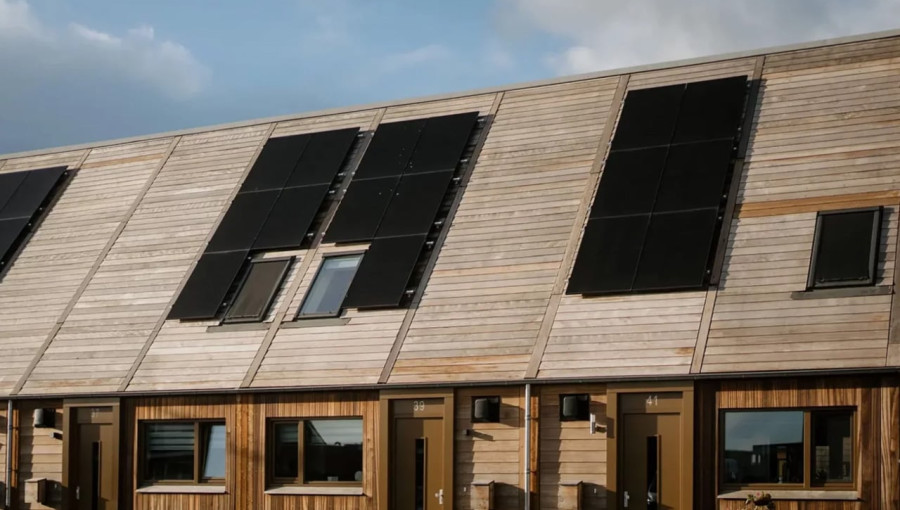
The Dutch architectural firm ORGA has unveiled a carbon-negative housing prototype in the village of Marknesse, Netherlands, designed to provide affordable rental homes for low-income households and first-time buyers. Commissioned by the housing association Mercatus, the project prioritizes environmental sustainability by utilizing bio-based and circular materials for 76% of its construction. By replacing high-carbon materials with renewable alternatives and employing prefabricated timber elements, the development successfully stores more carbon than it emits. This initiative demonstrates that ecological responsibility and housing accessibility can be effectively integrated, offering a scalable model for future residential construction projects.
The design of the twelve homes pays homage to the traditional "Delft Red" aesthetic of the region, featuring red clay and orange-red tones while utilizing modern, sustainable materials. Beyond the structural frame, the architects incorporated ecological features such as wooden chimneys that serve as nesting sites for local bat populations. The construction process relied on off-site prefabrication to minimize site disruption and accelerate assembly, a method that ensures high efficiency while maintaining strict environmental standards.
A key innovation in the project is the wall system, which is entirely free of synthetic plastic wraps. By using wood fiber insulation and a vapor-permeable design, the homes can passively regulate moisture and temperature, reducing the need for mechanical climate control. To ensure long-term sustainability, every material used in the construction has been cataloged in a Madaster Material Passport. This digital record allows for the future repurposing of components, providing residents with the necessary information to maintain their homes while ensuring that the materials remain part of a circular economy.