European Solar Module Prices Rise As Confidence Grows
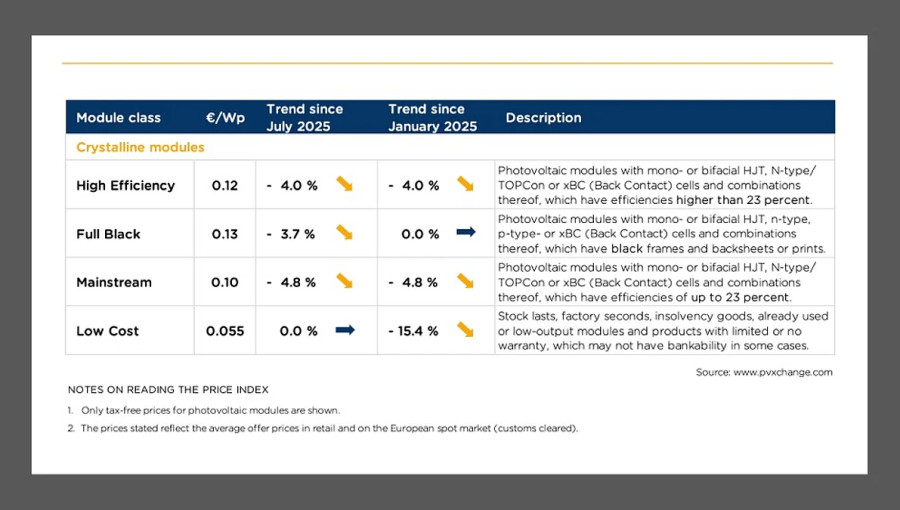
The European solar market is showing signs of renewed strength as prices for advanced solar module technologies climbed above the €0.1/Wp threshold in February 2026. According to the latest industry data, high-efficiency options such as TOPCon and back contact modules experienced significant month-on-month increases, driven by growing buyer confidence and a strategic shift toward next-generation solutions. While older PERC technology remains price-stable, the broader upward trend reflects a stabilizing market environment and optimistic purchasing sentiment across the continent.
European solar module prices have experienced a significant uptick, with multiple technology segments crossing the €0.1/Wp valuation for the first time in nearly a year. Recent market reports indicate a robust recovery between January and February 2026, signaling a departure from the record lows observed during the previous year. Monofacial TOPCon modules emerged as the most expensive category, reaching an average of €0.109/Wp following a 10% monthly price hike.
Other next-generation architectures followed a similar trajectory. Bifacial TOPCon prices rose by 9%, while full black and back contact modules saw gains of 8% and 7%, respectively. In contrast, older monofacial PERC technology remained stagnant at €0.077/Wp. This divergence underscores a clear market preference for high-efficiency solar module solutions, which are now commanding stronger pricing support as the industry transitions away from legacy PERC products.
Market sentiment remains high, as evidenced by a PV Purchasing Managers’ Index (PMI) score of 69. A survey of over 800 industry participants revealed that 51% of buyers intend to ramp up their procurement in the coming months. This optimism persists despite ongoing technical discussions regarding the long-term power degradation rates of TOPCon technology. European buyers appear focused on immediate performance gains and the strategic shift toward "value competition" currently being spearheaded by major global manufacturers.
The competitive landscape among brands also remains fluid. JA Solar claimed the top spot as the most popular solar panel brand in Europe for February, overtaking Trinasolar, which moved to third place. This shift reflects a broader trend of "dynamic competition" encouraged by industry associations to move the sector away from the aggressive price wars that characterized much of 2025.
While module prices have strengthened, the inverter market showed a slight downward trend. Prices for hybrid inverters between 1-15kW decreased by 3%, while larger units saw a 2% price drop. Despite these fluctuations, brand loyalty remains steady; Deye continues to lead the hybrid inverter sector, while Huawei and Sungrow maintain their dominant positions in the string inverter market as the most preferred suppliers.