Excess Solar Forces Battery To Stabilize SA Grid

The Australian Energy Market Operator (AEMO) has taken the unprecedented step of ordering a major South Australian battery to discharge its power and cease operations to counteract a surge in rooftop solar generation. On several occasions, the massive output from residential solar panels pushed the state's electricity grid demand below zero, creating a critical stability risk. These first-of-their-kind directives forced the Torrens Island battery to act as a load to stabilize the grid, highlighting the complex new challenges emerging as the energy system transitions to high levels of renewable power.
In a significant shift from its usual role, the market operator intervened at least three times in one week, compelling the Torrens Island battery to empty its stored energy and then remain on standby. This occurred on November 11, 12, and 15, when grid demand in South Australia fell to as low as negative 16 megawatts. The battery was instructed to discharge between 7 am and 10 am to free up its capacity, and then effectively sit idle, unable to perform its normal commercial function of charging at low prices and selling at high prices.
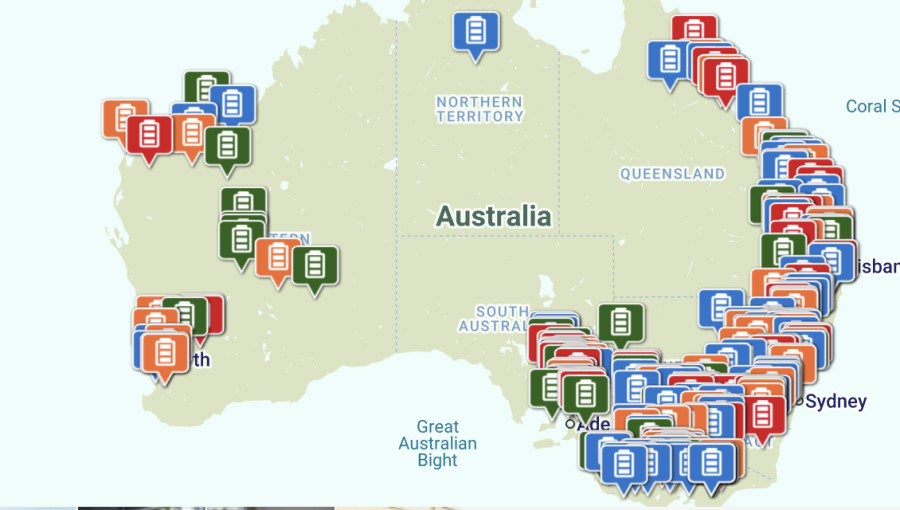
The core of the issue is the extraordinary success of rooftop solar in South Australia, where one in two homes has a system installed. The combined output can overwhelm demand, creating "minimum system load" conditions that threaten grid security. While AEMO has sought to establish contracts with large batteries to be available to charge during these events, it has been unsuccessful in South Australia, leading to the forced interventions. This contrasts with Victoria, where such contracts are in place, and Western Australia, where batteries are contracted to charge midday specifically to absorb solar generation.
These directives have financial consequences for asset owners. An analysis by Modo Energy noted that the Torrens Island facility was prevented from charging during the cheapest periods, resulting in thousands of dollars in lost revenue. However, the problem of excess solar may lessen over time. The increasing adoption of home batteries, the growth of electric vehicles, and government proposals to shift energy consumption to the middle of the day are all expected to raise minimum demand levels and provide a natural buffer for solar output.
South Australia remains at the forefront of the global energy transition, frequently setting new benchmarks. The state recently hit a new peak of 157.2 percent renewable generation, exporting or storing the surplus while only one small gas unit remained online for stability. By 2027, with the completion of a new transmission link to New South Wales, South Australia anticipates being able to operate its grid at times with no traditional synchronous generators running, relying instead on synchronous condensers and advanced grid-forming battery inverters for essential grid services.