Global Solar Investment Hits One Billion Dollars Per Day
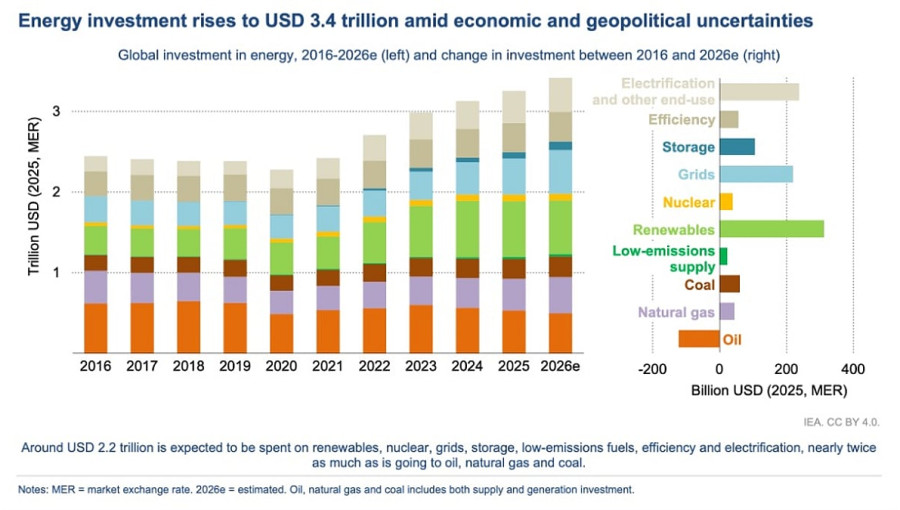
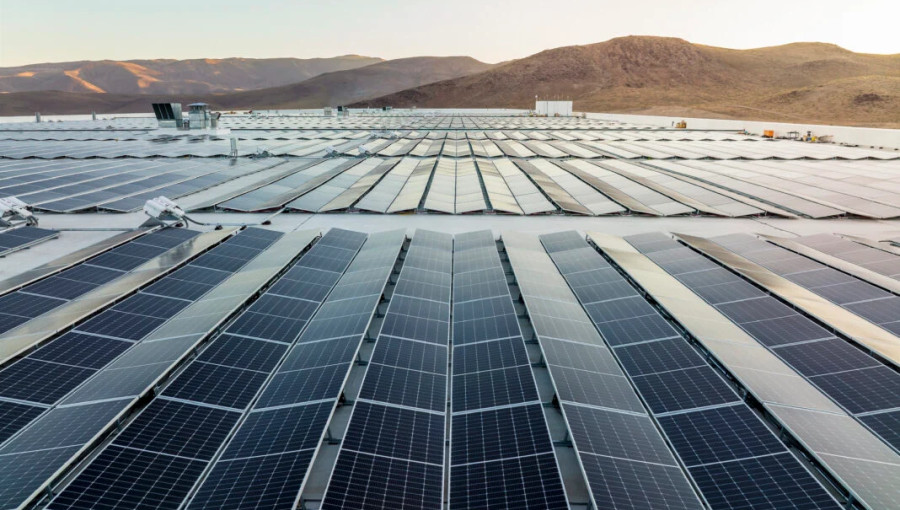
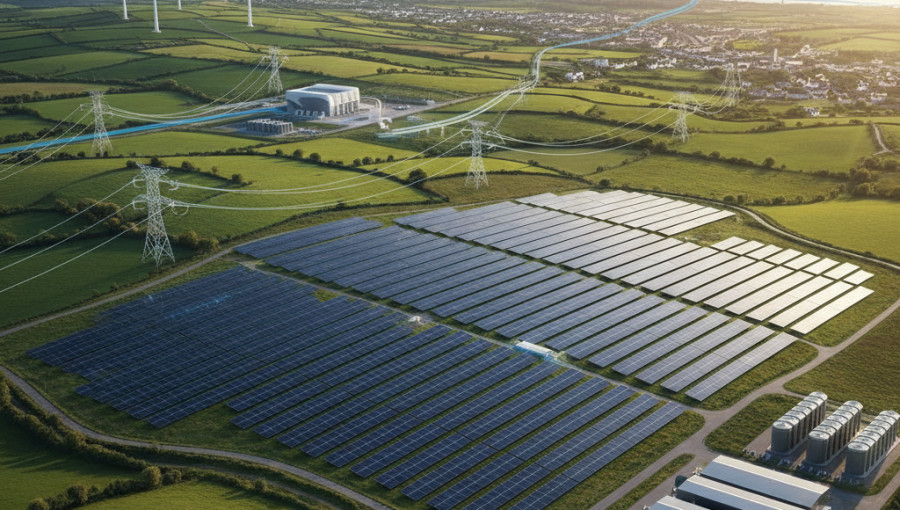
Global energy investment is projected to reach $3.4 trillion in 2026, with $2.2 trillion dedicated to low-emissions technologies. Driven by heightened energy security concerns following Middle East tensions, countries are prioritizing domestic power sources to reduce reliance on imported fuels. Solar energy is a primary beneficiary, with global investment expected to hit $365 billion—averaging $1 billion per day. While fossil fuel spending remains significant at $1.2 trillion, the shift toward renewables, battery energy storage systems, nuclear power, and grid infrastructure is accelerating as nations seek to insulate their economies from global supply disruptions and price volatility.
The International Energy Agency’s World Energy Investment 2026 report highlights that the current geopolitical climate is fundamentally reshaping energy strategies. With the world experiencing its second major energy crisis in five years, governments are increasingly viewing renewables as a strategic advantage. Beyond solar, investment in battery energy storage systems is forecast to exceed $100 billion this year, marking a 35% increase from 2025. This growth is largely driven by the need for system flexibility in major markets like China, the United States, and Australia, where renewable capacity is expanding rapidly.
Falling technology costs have significantly improved the economic viability of clean energy. In 2015, installing 1 GW of solar PV capacity required approximately $3 billion; today, that figure has dropped to $0.7 billion due to declining solar module prices and supportive policy frameworks. This affordability has triggered a surge in solar panel adoption across emerging markets. In the first quarter of 2026, the Philippines saw solar imports triple compared to 2025 levels, while 15 African nations collectively imported over $400 million worth of solar equipment, signaling a shift toward decentralized, home-grown energy solutions.
The transition is also yielding tangible economic benefits for fuel-importing regions. In 2025, investments in renewables, nuclear energy, electrification, and efficiency saved countries including India, China, and members of the EU approximately $260 billion on fossil fuel imports. These savings are expected to grow in 2026. While fossil fuel infrastructure continues to receive investment, the ratio is shifting; for instance, India now invests three dollars in renewables and nuclear for every dollar spent on fossil-based generation. As data center and artificial intelligence demands rise, the IEA anticipates these investment trends will permanently alter the global energy landscape.