
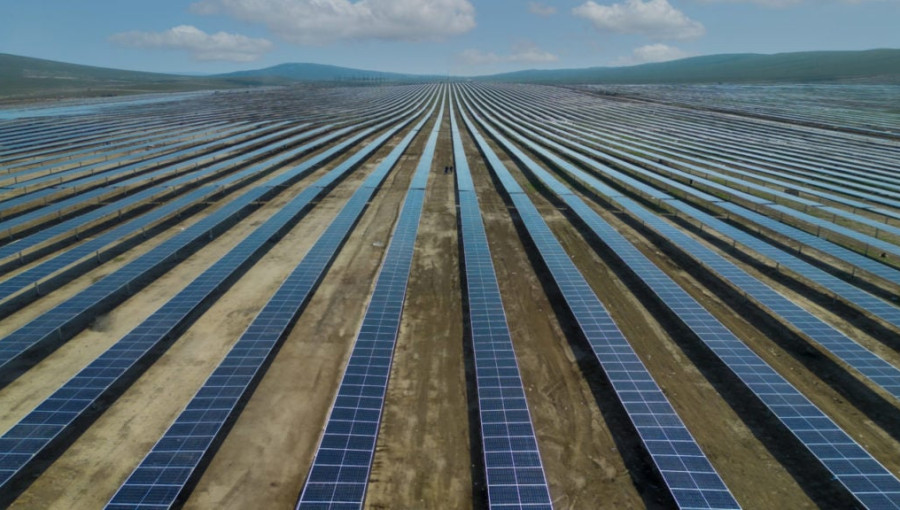
The global solar PV market is poised for a resilient 2026, maintaining strong fundamentals despite significant regulatory and political headwinds encountered in 2025. According to a new analysis by Wood Mackenzie, the sector will continue to expand, driven by surging electricity demand from data centers, electric vehicles, and manufacturing. While major markets like China and the United States navigate shifting policies, emerging trends such as balcony solar systems and massive “round-the-clock” hybrid projects in the Middle East are expected to redefine the industry’s trajectory and its role in the global energy mix.
Despite a turbulent 2025 marked by policy shifts in the world’s largest economies, the solar PV industry enters 2026 with robust growth prospects. Wood Mackenzie’s latest report identifies three pivotal trends that will shape the sector, arguing that the underlying demand for renewable energy remains unshakable. Last year, the industry grappled with a slowdown in China due to regulatory changes and uncertainty in the United States stemming from the Trump administration’s overhaul of federal incentives and permitting laws. Meanwhile, India’s growth may face hurdles in 2026 as stricter domestic content requirements take effect.
The primary engine for solar expansion over the next five years will be the rapid electrification of the global economy. Increased energy loads from data centers, manufacturing hubs, and transportation will necessitate massive capacity additions. In the Asia-Pacific region, solar is expected to overwhelmingly dominate new power installations. Although coal and gas still provide the bulk of the region’s current generation, solar PV, wind, and energy storage are projected to constitute one-third of Asia’s power mix by 2030—a significant jump from less than 10% in 2020.
In the United States, the solar sector is demonstrating remarkable tenacity. Even with a federal preference for fossil fuels and a surge in gas generation to meet data center needs, Wood Mackenzie forecasts that US solar capacity will expand by 65% through 2030. This represents an increase of approximately 232 GWh in generation over the next four years. While gas currently leads the energy mix, the sheer volume of solar additions planned between 2026 and 2030 nearly matches the total gas capacity currently operational on the US grid.
A notable shift in the residential market is the emergence of “plug-in” or balcony solar PV. Following Utah’s authorization of portable generation devices up to 1.2 kW, over a dozen US states have adopted similar regulations. These systems offer a cost-effective alternative to traditional rooftop solar, allowing consumers to lower energy bills without complex utility agreements. This trend mirrors success in Europe, particularly in Germany—where balcony systems accounted for 40% of registered installations in 2024—and is now gaining traction in France, Italy, and the Netherlands.
The landscape of utility-scale solar is also evolving with the development of a landmark 5.2 GW solar-plus-storage project in Abu Dhabi. Led by Masdar and the Emirates Water and Electricity Company (EWEC), this $6 billion facility is designed to provide 1 GW of “round-the-clock” baseload power. Unlike traditional projects that use storage for grid stability, this site aims to meet the constant energy demands of AI hubs and data centers. By providing firm renewable output, the project could fundamentally redefine how clean energy is integrated into the grid as a reliable alternative to traditional baseload sources.