
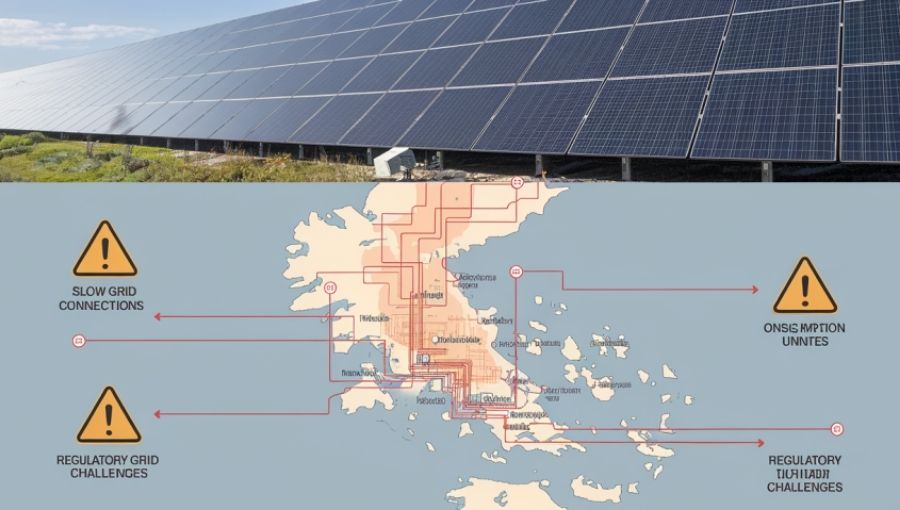
As of late March 2025, Greece’s self-consumption capacity has nearly reached 1 GW, specifically standing at 937.6 MW, with photovoltaics comprising the majority at 871.9 MW. The transition from a net metering to a net billing system, in alignment with European directives, has been a significant development in the sector. By the end of the first quarter, there were 32,955 self-consumption units installed, and ongoing projects, along with pending applications, total an estimated capacity of 1,865 MW—approaching the legal limit of 2 GW. Stakeholders, including energy communities and individuals, have expressed concerns over the slow pace of grid connections facilitated by the Hellenic Distribution Network Operator (HEDNO or DEDDIE).
This frustration is exacerbated by DEDDIE’s focus on integrating smaller projects of up to 10.8 kW, effectively sidelining larger initiatives. The Renewable Energy Sources Operator and Guarantees of Origin (DAPEEP) recently began accepting applications for net billing on projects exceeding this capacity, highlighting the necessity for a more expedited connection process. Additionally, renewable energy aggregators have raised issues regarding the lack of clarity in the regulatory framework, which affects their ability to operate effectively in the market. This situation underscores the urgent need for regulatory adjustments and enhanced grid infrastructure as Greece pushes towards its renewable energy goals.