Innovative Solar Assisted Aerogel Transforms Seawater Desalination Efficiency

A new type of aerogel developed by researchers at Hong Kong Polytechnic University could significantly improve the process of desalinating seawater, making it more efficient and scalable. Traditional solar-powered evaporators often struggle to perform effectively on a larger scale due to structural limitations. The innovative photothermal aerogel created by the team allows for better evaporation by optimizing heat localization and water transport. With successful initial tests demonstrating the potential to produce drinkable water, this advancement could help address the global water crisis exacerbated by pollution, climate change, and rapid population growth.
Earth is about 71 percent water, with 97 percent of that water found in the oceans. This leaves us with only 3 percent in the form of freshwater, much of which is frozen as glaciers. Only 0.3 percent of freshwater is available on the surface in lakes, swamps, springs, and rivers, making drinkable water scarce. Furthermore, climate change, urbanization, and pollution threaten the little water we have, endangering 2 billion people who rely on contaminated sources. Pathogenic microbes in contaminated water can cause serious illnesses such as cholera and dysentery, which become fatal in places lacking vaccines or medical care.
Desalination of seawater presents a potential solution to this problem, with one promising approach involving porous materials that use solar energy for evaporation. However, many existing solar-powered evaporators struggle to scale effectively. The performance issues are largely due to their design, where larger structures limit water vapor escape. Researcher Xi Shen sought to enhance the efficiency of these systems and has created a new photothermal aerogel that performs better at converting seawater into freshwater.
The advancements in performance can be attributed to enhanced structural design, which improves heat localization, water transport, and vapor transport. Solar energy is entirely harnessed to facilitate evaporation, and attempts have been made to develop photothermal materials that convert sunlight into heat to expedite the process. Although hydrogels have previously been used for desalination, they are water-retaining polymers that can negatively impact efficiency. This led Shen and his team to focus on creating a polymer-based aerogel, designed for improved structural integrity and efficiency.
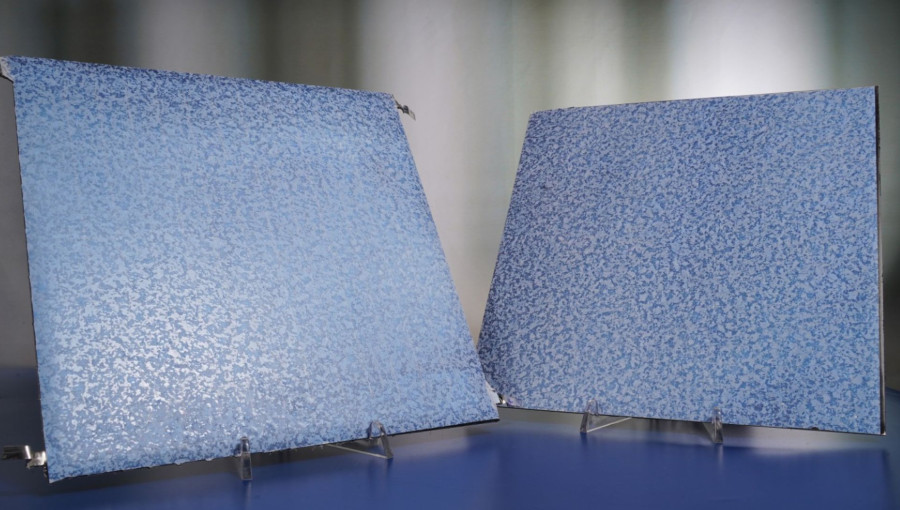
Aerogels are inherently more rigid than hydrogels, allowing both liquid water and water vapor to traverse their pores effectively. Shen addressed the common scalability problem by developing a spongy aerogel through 3D printing, layering a paste of carbon nanotubes and cellulose nanofibers. The aerogel features thin boundaries between its long, uniformly distributed microscopic pores, which were intended to enhance vapor output. Each layer of the aerogel was frozen immediately after printing, ensuring structural solidity for subsequent layers.
Shen's research team tested the new aerogel by submerging it in seawater contained within a curved, transparent plastic cover. When sunlight penetrated this cover, it heated the aerogel, causing water vapor to rise and condense on the lid before flowing into a funnel that directed it to a separate container. Initial tests showed the system could produce about 3 tablespoons of drinkable water. Given the aerogel's durability and scalability, future applications may yield much greater outputs.
“We have tested the performance for up to a week and saw no performance degradation,” Shen said, indicating promising durability and effectiveness. Although the timeline for replacing the aerogel remains unclear, ongoing real-world testing will help assess its long-term capabilities. Plans for further upgrades and scaling of their desalination method suggest that this innovative aerogel could play a critical role in providing clean water, offering a potential solution to a pressing global issue.
Source: https://arstechnica.com/science/2025/07/this-aerogel-and-some-sun-could-make-saltwater-drinkable/