Italy Faces Uneven Growth Across Solar Storage Sectors
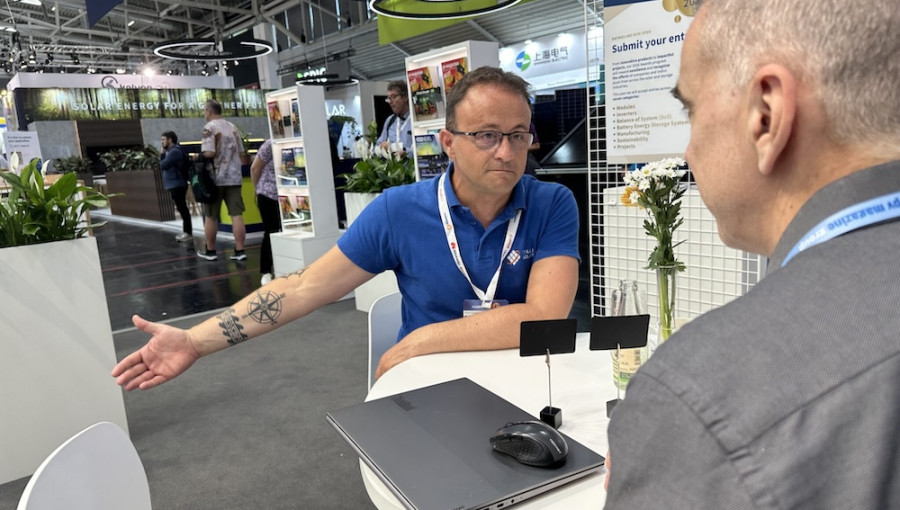
Italy’s energy storage sector is experiencing a period of significant, albeit uneven, growth. Federico Brucciani of Italia Solare notes that the residential market has matured rapidly, largely due to tax-based incentive schemes that have made the integration of batteries with solar panels the standard for households. Conversely, the commercial and industrial sector remains underdeveloped, hindered by a lack of internal energy expertise and inconsistent regional support. Meanwhile, the utility-scale segment is poised for substantial expansion, with projections pointing toward 50 GWh of standalone storage by 2030, largely managed by the national grid operator, Terna.
The residential market has undergone a structural transformation, with approximately 80% of new solar installations now including storage. This shift, driven by the eco-bonus and Superbonus tax rebates, has created a distributed storage base of roughly 18 GW. This capacity is increasingly viewed as a vital asset for the national grid, though its full potential for system flexibility remains underutilized due to the absence of a fully commercialized market framework. While pilot projects exist, the transition from testing to operational flexibility markets remains a work in progress for distribution system operators.
In contrast, the commercial and industrial (C&I) segment faces persistent challenges. Brucciani describes this area as largely stagnant, with many businesses still opting for solar-only systems. Small and medium-sized enterprises often lack the specialized staff required to manage energy assets, and the reliance on fragmented regional tenders creates a "stop-and-go" investment environment. With only about 300 MW being installed annually, the sector has yet to see the widespread adoption of battery technology that characterizes the residential space.
Looking toward the future, the utility-scale sector is expected to play a major role in grid balancing and system stability. Terna’s centralized management of large-scale batteries provides a structured, albeit rigid, path for development. While financial institutions are showing interest in funding these projects, they currently favor conservative, merchant-based risk models. To move beyond the current reliance on annual tax deductions, industry experts suggest that Italy should transition toward more permanent structural support mechanisms, such as guarantee schemes, to provide the long-term predictability necessary for sustained growth across all segments of the energy market.