UK Electric Vehicle Sales Overtake Petrol Models For First Time
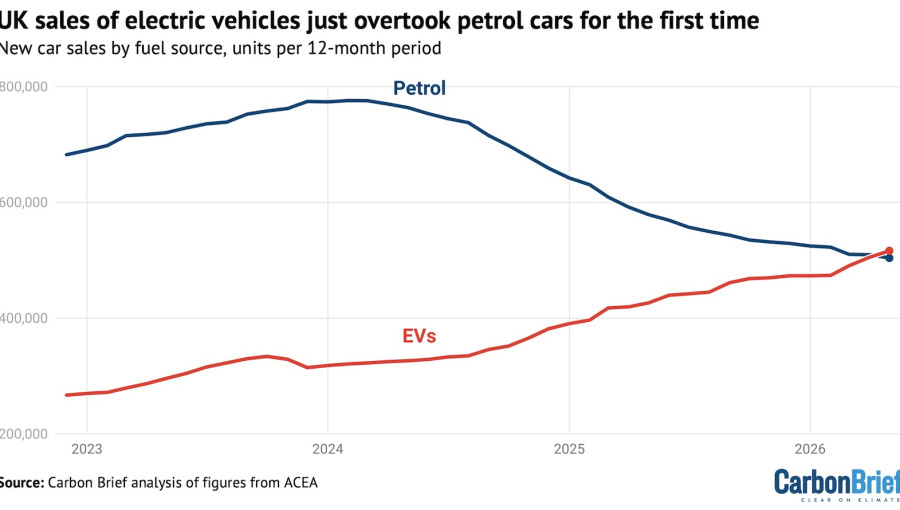
For the first time in the United Kingdom, annual sales of new electric vehicles have surpassed those of petrol-powered cars. Data analyzed by Carbon Brief reveals that in the 12 months leading up to May 2026, consumers purchased 516,490 battery electric vehicles, compared to 504,010 petrol models. This milestone arrives amidst ongoing debates regarding the government’s zero-emissions vehicle mandate, which requires a growing percentage of new car sales to be fully electric. While some industry representatives argue that consumer demand is insufficient to meet these targets, the latest figures demonstrate a consistent and significant shift toward electrification.
The analysis, which utilizes data from the European Automobile Manufacturers’ Association, highlights a clear divergence in market trends. While hybrid vehicle sales remain relatively stagnant with only a 2% year-on-year increase as of May 2026, battery electric vehicle sales surged by 34%. Conversely, demand for petrol cars has declined by 14%. Plug-in hybrids are also experiencing notable growth, rising 24% over the same period. This trend mirrors a broader international movement, following a similar milestone in the European Union and contributing to a global landscape where electric vehicles accounted for one in four new car sales in 2025.