Mandatory Fire Testing Reshapes Battery Energy Storage Safety

Large-Scale Fire Testing (LSFT) is rapidly evolving from a voluntary safety measure into a mandatory regulatory requirement for Battery Energy Storage Systems (BESS). Set to become compulsory under the 2026 edition of NFPA 855, these tests simulate worst-case scenarios by igniting entire units with safety systems disabled to verify that fire cannot spread to neighboring modules. As insurers and financial institutions increasingly demand these validations, major manufacturers are racing to demonstrate that their hardware can contain thermal events and prevent large-scale site losses.
The implementation of LSFT marks a significant shift in how the energy storage industry validates system safety. While the existing UL9540A standard focuses on thermal runaway at the cell level, LSFT—conducted under the CSA TS-800:24 protocol—assesses the risk of fire propagation across an entire installation. By intentionally allowing a single unit to burn completely without the aid of detection or suppression systems, engineers can confirm that the physical design of the BESS effectively isolates the hazard.
Authorities Having Jurisdiction (AHJs) across the United States are already adopting these standards, and the practice is gaining global traction as a benchmark for project bankability. The industry is moving toward a philosophy where fire containment is as critical as fire prevention. While advanced technologies like immersion cooling, aerosol suppressants, and off-gas detection systems aim to eliminate fire risks, LSFT provides a final layer of assurance that a failure will not result in a catastrophic multi-unit conflagration.
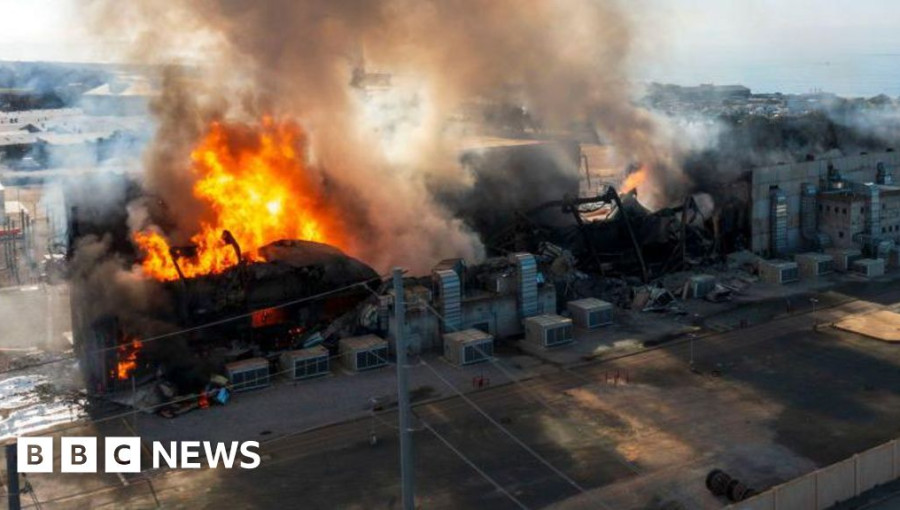
Recent history has highlighted the necessity of these rigorous benchmarks. Major incidents at the Moss Landing and Gateway projects in California saw fires spread across entire arrays, leading to prolonged site closures. In contrast, a 2025 incident at the Thurrock BESS project in the United Kingdom demonstrated the value of containment; a fire in a single unit was successfully isolated, allowing the site to be declared safe within 24 hours. Manufacturers are now using LSFT results to prove their systems will behave more like the Thurrock incident in the event of a failure.
Leading manufacturers have been proactive in publicizing their test results throughout 2024 and 2025. Sungrow conducted high-profile tests for its PowerTitan 1.0 and 2.0 systems, with the latter enduring a 25-hour burn that showed no spread to adjacent units. Hithium recently completed a 15-hour "open-door" LSFT at a 100% state of charge, while Fluence combined five days of explosion testing with fire validation for its Gridstack Pro 5000 system. Other major players, including BYD and Canadian Solar, have also completed similar safety validations.
While many industry leaders have embraced transparency regarding LSFT, Tesla has yet to release public data concerning large-scale fire tests for its Megapack technology. This follows a 2022 incident at the Victorian Big Battery in Australia, where a fire during commissioning spread between two Megapack units. Although that fire was contained within six hours, the industry’s shift toward mandatory LSFT will likely require all major providers to provide standardized proof of containment capabilities by 2026.