Netherlands Establishes 110 GWh Battery Storage Target For 2040
The government aims to address national grid congestion by significantly expanding battery capacity through a new policy framework and 25 targeted actions.
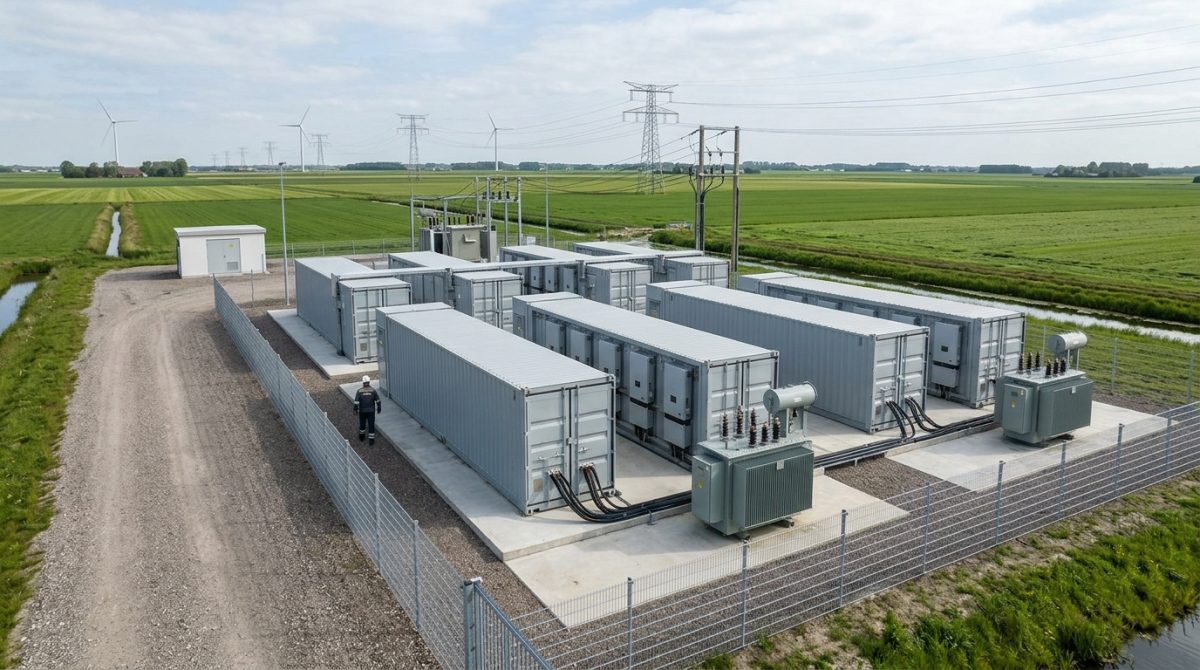
The Dutch government has introduced its first national benchmark for energy storage, setting a goal to reach 110 GWh of battery capacity by 2040. This target represents a more than 50-fold increase compared to the total capacity installed by the end of 2025. The objective was formally presented to the Dutch parliament this week as a key strategy to manage grid congestion.
To achieve this capacity, the Cabinet ministry developed the Energy Storage Policy Agenda (Beleidsagenda Energieopslag) in collaboration with the grid operator association Netbeheer Nederland, the trade body Energy Storage NL, the Authority for Consumers and Markets (ACM), and various municipal and provincial governments. This policy framework includes 25 specific actions intended to eliminate structural barriers that have hindered the deployment of energy storage projects across the country.
The initiative prioritizes utility-scale battery energy storage systems (BESS) by streamlining permitting processes through improved coordination between developers, grid operators, and regional authorities. The government intends to make flexible grid connection contracts the standard for large-scale batteries. Furthermore, the plan introduces new tariff and compensation structures designed to incentivize grid-conscious operation, although specific details regarding these mechanisms have not yet been provided.
These regulatory developments follow recent market shifts, including efforts by the transmission system operator TenneT to implement time-limited and capacity control contracts. Earlier in 2026, TenneT secured a 200 MW / 800 MWh congestion mitigation agreement, following a previous allocation of €100 million in subsidies for storage projects aimed at relieving grid pressure.
The Netherlands Enterprise Agency (RVO) will monitor progress toward the 110 GWh target on an annual basis. The Cabinet has indicated that it is prepared to introduce further political interventions if the pace of deployment fails to meet the structural requirements of the national power grid.