Akaysha Energy Targets Major German Battery Storage Expansion
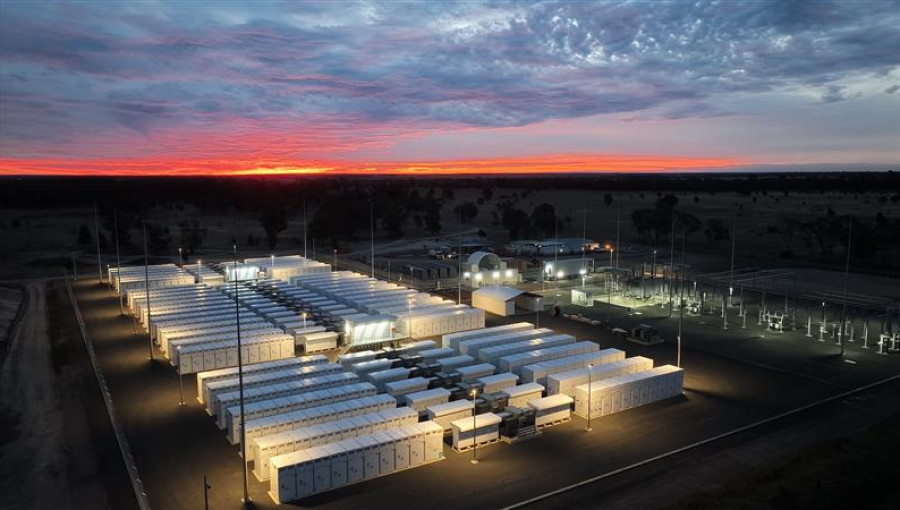
Akaysha Energy, a BlackRock-owned developer, has partnered with Copenhagen Energy to launch large-scale battery energy storage systems (BESS) across Germany. Supported by an AUD 300 million debt facility, the joint venture aims to capitalize on Germany’s robust merchant market and liquid intraday trading. As the sector shifts from ancillary services toward wholesale revenue, the partnership will utilize sophisticated contracting structures, including tolling agreements, to secure project financing and support a projected 15 GW of grid-scale storage by 2030.
The expansion is underpinned by a significant corporate debt facility secured in late 2025 from a global banking syndicate including Deutsche Bank, BNP Paribas, ING, SMBC, and Westpac. According to Paul Curnow, Akaysha Energy’s managing director and chief commercial officer, the German projects will be funded through non-recourse project finance and potential regional co-investments. The company plans to maintain a high level of contracted capacity—targeting between 60% and 80%—while keeping some exposure to the merchant market to maximize returns.
Germany’s energy market currently offers some of the strongest merchant fundamentals in Europe. In 2025, day-ahead price spreads for two-hour battery systems reached €85,000 per MW, significantly outperforming the British market. Analysts note that Germany’s intraday market has become the most liquid on the continent, facilitating a structural shift where wholesale trading is replacing ancillary services as the primary revenue driver for storage assets. This environment has made longer-duration BESS and tolling agreements increasingly attractive to investors and lenders alike.
To navigate this landscape, Akaysha Energy is implementing a strategy refined in the Australian market. This "Australian playbook" involves complex contracting products such as virtual toll structures, revenue-sharing models, and capacity swaps. These instruments are designed to meet the specific risk profiles of offtake customers while remaining attractive for large-scale project finance. By tailoring these products to the German market, the developer seeks to unlock the capital necessary for massive storage deployment.
Despite the optimistic outlook, the industry faces significant regulatory and infrastructure hurdles. Grid connection requests in Germany recently surged to 720 GW, nearly nine times the nation’s peak load, leading to tighter access terms. Furthermore, a major point of uncertainty involves the current exemption from grid capacity charges, which is set to expire for batteries commissioned after August 4, 2029. The Federal Network Agency (Bundesnetzagentur) has yet to finalize the successor regime, leaving developers to model various scenarios for projects slated for the end of the decade.
To mitigate these risks, Akaysha is maintaining a flexible project pipeline, allowing for strategic sequencing based on regulatory clarity. Recent modeling suggests that forthcoming dynamic grid charges could have a neutral or even positive impact on BESS economics by incentivizing grid-supportive operations. However, industry experts warn that if future capacity fees are set too high, they could undermine the investment case. As of early 2026, Germany has emerged as a leader in tolling agreements, as banks increasingly demand these or floor structures to mitigate the risks associated with pure merchant exposure.