New Hybrid AI Boosts Battery Life Prediction Accuracy
Researchers have developed a breakthrough hybrid AI model that increases the accuracy of lithium-ion battery life predictions by up to 87 percent. By combining deep learning techniques with probabilistic filtering, the new system provides a more reliable estimate of a battery’s remaining useful life. This advancement addresses a major hurdle for electric vehicles and grid-scale storage systems, where unexpected power failures can be costly and dangerous. The model’s ability to function effectively even with noisy or limited data sets it apart from traditional physics-based or standalone data-driven approaches.
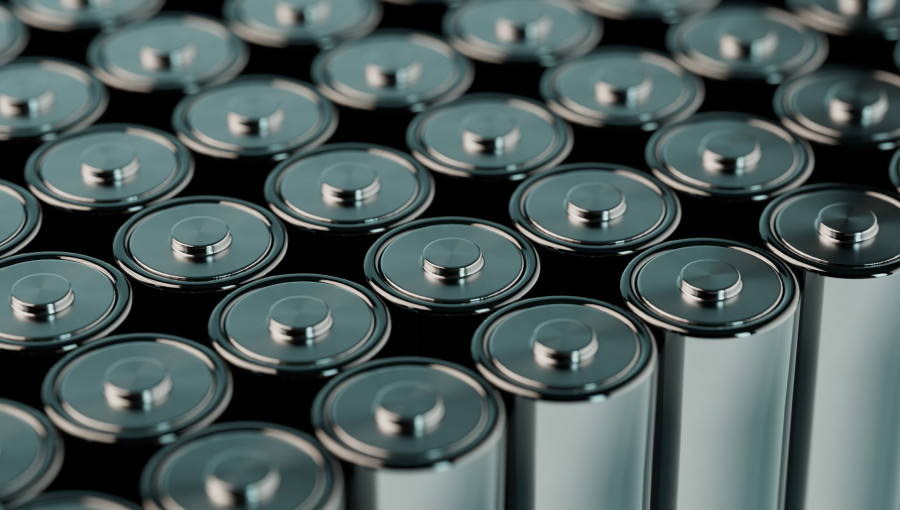
Lithium-ion batteries are the backbone of modern technology, yet their tendency to degrade over time poses a significant challenge for industries ranging from consumer electronics to renewable energy storage. Predicting the remaining useful life (RUL)—the number of charge cycles a battery can endure before its capacity falls below a functional threshold—has historically been difficult due to the complex chemical and environmental factors involved. Traditional methods often struggle to balance the precision of physics-based simulations with the flexibility of data-driven models.
To solve this, a research team introduced a sophisticated hybrid model that integrates convolutional neural networks (CNN), gated recurrent units (GRU), and particle filters. The process begins with a preprocessing stage called complete ensemble empirical mode decomposition with adaptive noise, which cleans the raw data by removing noise while preserving essential degradation patterns. Once the data is refined, the 1D CNN extracts critical features, and the GRU tracks how these features change over time to forecast future performance.
A key innovation in this approach is the inclusion of a particle filter, which acts as a corrective layer. While traditional AI models can accumulate errors over long-term predictions, the particle filter continuously adjusts the output by estimating the most probable state of the battery. This is further supported by a moving window mechanism that allows the model to adapt dynamically as new information becomes available, ensuring the predictions remain stable and precise.
The model was rigorously tested against benchmark datasets from NASA and the Center for Advanced Life Cycle Engineering (CALCE). The results were significant: the hybrid system outperformed standalone GRU models by 87.27 percent and standalone particle filters by 82.88 percent. Even when compared to simpler hybrid configurations, the new model showed a 55.43 percent improvement in accuracy, maintaining high performance even when trained on limited data.
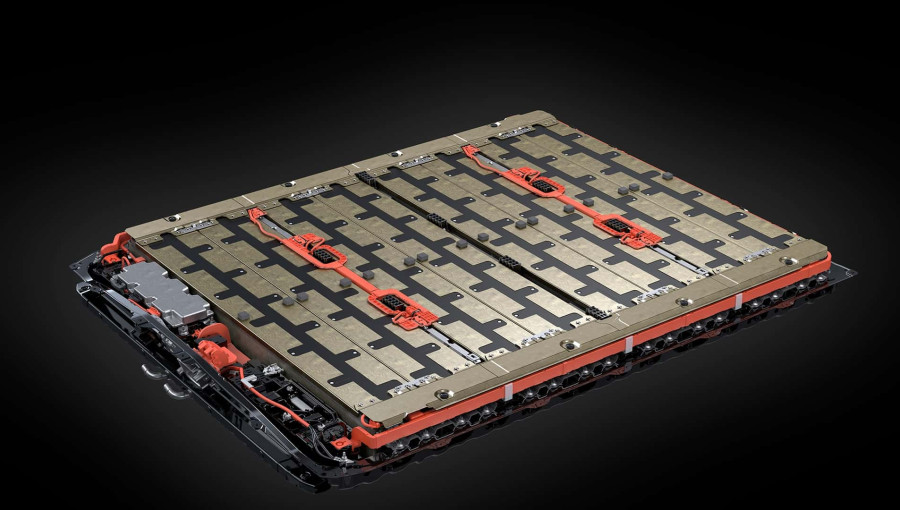
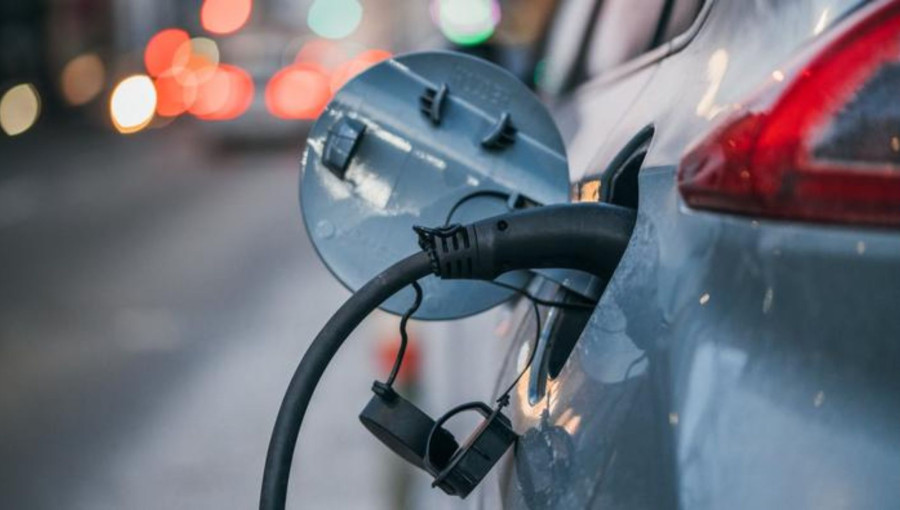
The implications for the automotive and energy sectors are substantial. For electric vehicle owners, more accurate RUL predictions mean reduced range anxiety and fewer sudden breakdowns. For utility companies managing grid-scale storage, the technology allows for optimized maintenance schedules and improved reliability for renewable energy sources. Moving forward, researchers aim to test the model under extreme temperatures and expand its application to multi-cell battery packs to further validate its real-world utility. The findings were recently published in the journal Green Energy and Intelligent Transportation.