
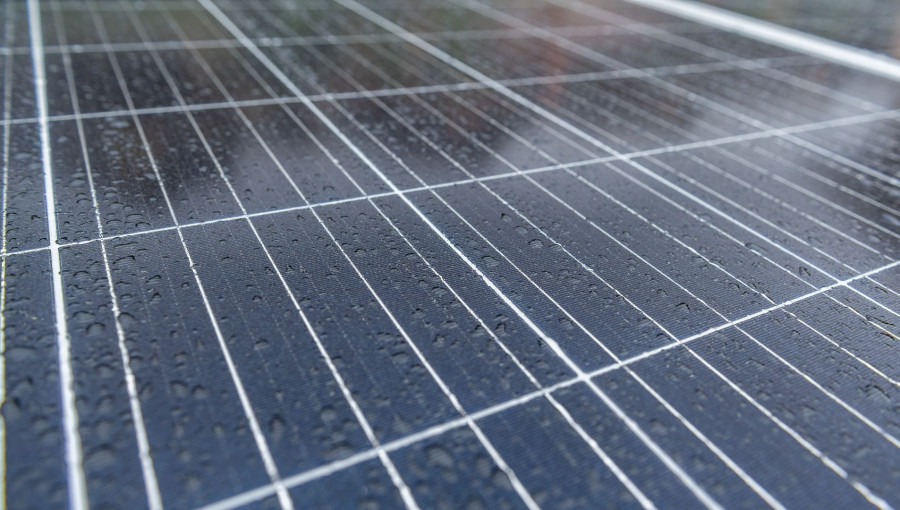
Researchers at the Institute of Materials Science of Seville (ICMS) in Spain have developed a groundbreaking hybrid solar cell capable of generating electricity from both sunlight and rainfall. By applying a specialized thin film to perovskite solar cells, the team created a device that utilizes triboelectric energy to harvest power from falling raindrops. This innovation addresses the traditional limitations of solar panels during inclement weather, offering a reliable power source for IoT devices and environmental sensors even in regions with heavy cloud cover or frequent precipitation.
While conventional solar cell technology has revolutionized carbon-free electricity generation, its efficiency remains heavily dependent on clear skies. To overcome this, the ICMS research team focused on perovskite materials, which are known for high energy-conversion efficiency but suffer from sensitivity to environmental factors. By integrating a multifunctional protective layer, the researchers have created a hybrid system that maintains performance in the sun while tapping into the kinetic energy of rain.
The core of this innovation is a plasma-deposited thin film measuring less than 100 nanometers in thickness—roughly 800 times thinner than a human hair. This layer serves a dual purpose: it acts as a robust encapsulant that protects the delicate chemistry of the perovskite solar cell from humidity and temperature fluctuations, and it functions as a triboelectric surface. When raindrops impact this surface, the kinetic energy is converted into electrical energy, allowing the module to remain productive regardless of the weather.
Experimental results conducted at the ICMS facility demonstrate the significant potential of this technology. A single falling raindrop was found to generate a potential difference of 110 V, a charge sufficient to power small portable electronics or LED circuits. This capability ensures that devices can maintain energy autonomy even when submerged or subjected to prolonged storms, providing a steady power supply for critical infrastructure.
According to Carmen Lopez, a lead researcher on the project, the study proves the feasibility of combining photovoltaic technology with triboelectric nanogenerators in a single thin-film configuration. This hybrid approach is expected to be particularly transformative for the Internet of Things (IoT) industry. Constant power is essential for outdoor sensors used in precision agriculture, weather forecasting, and the structural monitoring of large-scale engineering projects like bridges.
The findings, recently published in the journal Nano Energy, highlight the potential for these “rain panels” to replace standard solar panels in versatile environmental conditions. By mitigating the drop in output typical of cloudy days, this technology paves the way for a more resilient and versatile renewable energy infrastructure that can operate efficiently across diverse climates worldwide.