New Solid State Battery Breakthrough Achieves Record Energy Density
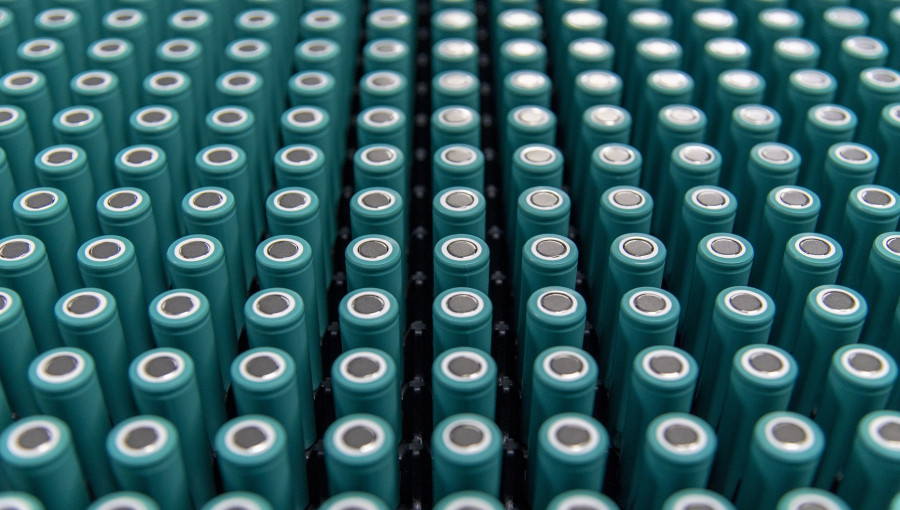
Researchers at the Chinese Academy of Sciences have engineered a solid-state lithium-metal battery that achieves a high energy density of 451.5 Wh/kg. This breakthrough technology supports ultra-fast charging, successfully completing 700 cycles with 81.9 percent capacity retention under a 20C charging rate. By utilizing a novel "compatibilizing-solvent plasticization" strategy for polyvinylidene fluoride (PVDF) electrolytes, the team effectively mitigated side reactions that typically degrade battery performance. This development represents a significant step toward practical, high-density energy storage, as the pouch cell demonstrated both superior capacity and intrinsic safety during nail-penetration testing, potentially outperforming current commercial lithium iron phosphate standards.
The team addressed the electrochemical instability common in conventional PVDF-based electrolytes by refining the interaction between the polymer and plasticizers. By employing a temporary volatile solvent during the manufacturing process, they ensured that the plasticizer remained securely trapped within the polymer network. This configuration facilitates the creation of a lithium fluoride-rich interfacial layer, which is essential for stabilizing the battery during operation. The study, published in the Journal of the American Chemical Society, highlights that this method successfully suppressed unwanted side reactions at both the lithium-metal anode and the high-voltage cathode.
Beyond its energy density, the battery demonstrated impressive durability, maintaining a 99.1 percent Coulombic efficiency for lithium plating and stripping over 1,400 cycles. The researchers utilized sulfolane as a representative plasticizer, which proved effective at preventing migration and maintaining structural integrity. In practical testing, an ampere-hour-level pouch cell featuring a thin lithium-metal anode achieved an energy density more than double that of many standard commercial lithium iron phosphate cells. These findings contribute to the broader industry objective of commercializing solid-state systems, with various developers aiming to bring 400 to 500 Wh/kg batteries to market by 2026 or 2027.