Offshore Floating Solar Could Power All Of Italy
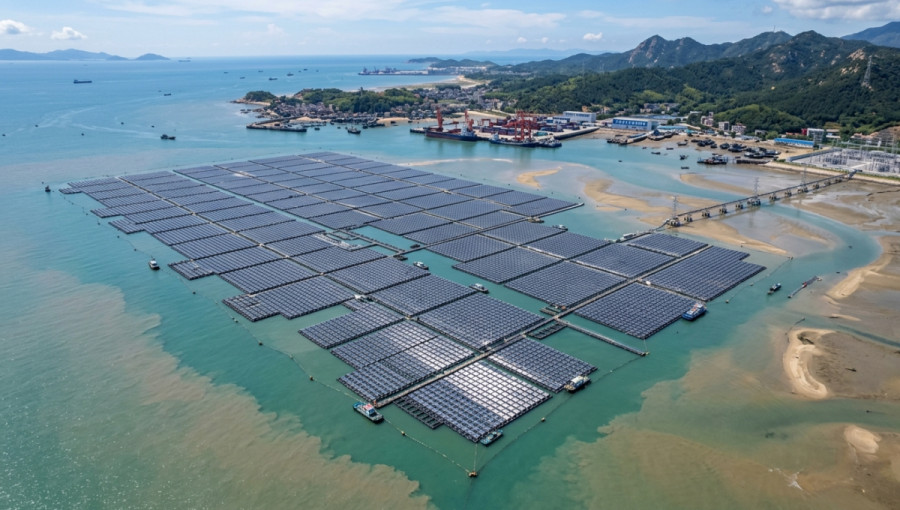
A study led by researchers from the Sapienza University of Rome indicates that Italy could meet its entire annual electricity demand of 306.1 TWh by utilizing just 2% of its most suitable offshore waters for floating solar installations. By employing a geospatial multi-criteria assessment, the research identified high-potential zones in the Adriatic Sea, the Gulf of Taranto, and coastal regions around Sicily and Sardinia. While technical hurdles such as seawater corrosion and structural stress persist, the findings highlight offshore floating PV as a scalable, high-capacity solution for nations with limited land availability and extensive coastlines.
The research, published in the journal *Energy for Sustainable Development*, utilized a sophisticated geospatial model to map the technical feasibility of offshore floating PV across Italy’s Exclusive Economic Zone. Lead author Leonardo Micheli explained that the team used QGIS software to integrate oceanographic, environmental, and operational data, creating a feasibility index ranging from 0 to 1. This model accounted for ten critical parameters, including wave height, wind speed, bathymetry, and proximity to the shore, while excluding restricted zones such as marine protected areas and established ferry routes.
The assessment identified the Adriatic Sea and the Gulf of Taranto as particularly favorable due to their moderate wave conditions and manageable water depths. These regions offer the necessary balance between solar exposure and environmental stability required for floating structures. To better understand the physical demands on these systems, the scientists developed a Hydrodynamic Severity Index, which combines wave height and peak periods to simulate the mechanical stress that solar modules and floating platforms must endure in a marine environment.
Despite the significant potential, the study acknowledges that offshore floating PV is still in its infancy due to the rigors of the sea. Operating in saltwater environments introduces challenges such as accelerated corrosion, biological fouling, and high maintenance costs. Furthermore, the structural integrity of the solar panel arrays must withstand constant wave movement and high wind speeds, which can cause mismatch losses and reduce energy yield by nearly 9% in extreme conditions. There are also environmental considerations regarding how these large-scale arrays might affect light penetration and local marine ecosystems.
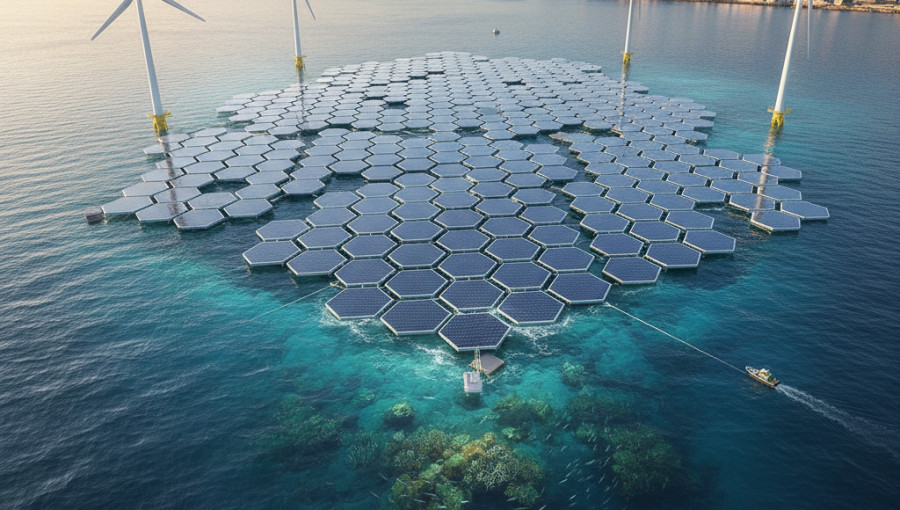
However, the benefits of moving solar energy offshore are substantial. Marine installations take advantage of vast, unobstructed surfaces and benefit from natural cooling provided by water and wind, which enhances the efficiency of the solar module. Additionally, these systems can be co-located with existing or planned offshore wind farms. This shared infrastructure approach allows for a more stable power generation profile and significantly reduces the levelized cost of electricity (LCOE) by utilizing common grid connections and maintenance vessels.
The researchers concluded that even under conservative development scenarios, only a tiny fraction of Italy’s maritime territory would be required to satisfy national power consumption. This modeling framework is designed to be adaptable, offering a blueprint for other coastal nations to evaluate their own offshore solar potential. As technology advances and costs decline, offshore floating PV is expected to become a competitive and essential pillar of the global transition toward renewable energy.