
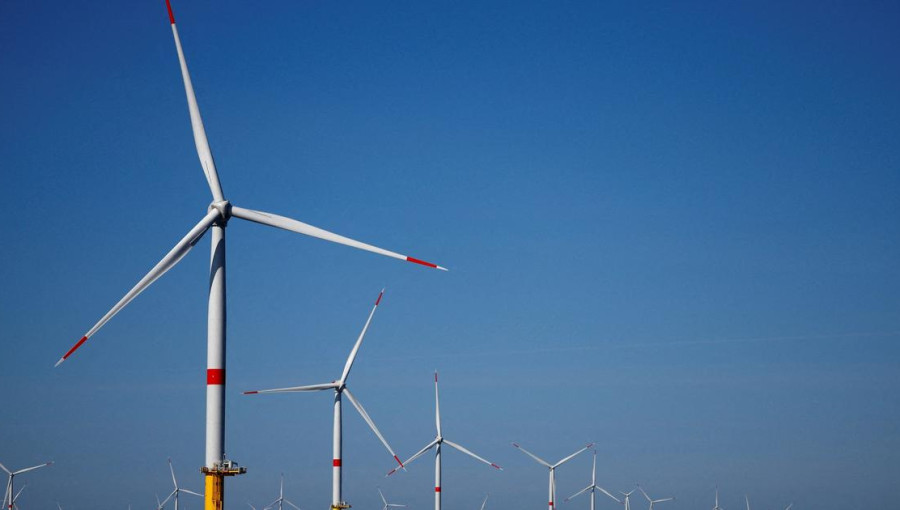
A new study suggests that offshore wind farms can significantly benefit marine ecosystems, acting as artificial reefs that foster biodiversity. Researchers discovered that the concrete foundations of wind turbines support a thriving community of stationary organisms, which in turn creates a complex food web. The areas surrounding these installations were found to host a greater variety of fish species and double the total biomass compared to similar, undeveloped regions, challenging some previous environmental concerns about the technology.
The research indicates that the rough, concrete surfaces of the turbine bases provide an ideal anchor for sessile life forms, such as barnacles, sea sponges, and various types of algae. These immobile organisms establish the foundation for a more intricate and robust food chain, attracting a diverse range of marine life and cultivating a more vibrant underwater environment. This development leads to a notable increase in local aquatic populations.
The study’s findings are significant, revealing that regions with established wind farms not only supported a richer variety of fish species but also contained twice the overall biomass when measured against comparable control areas in the open sea. The effect is analogous to the long-understood benefits of artificial reefs, which are often created by deliberately sinking old ships, oil rigs, or other structures to promote marine habitats. While perhaps not surprising given this context, the data provides strong evidence of this positive ecological impact.
These promising results offer a counterpoint to earlier concerns raised by some in the scientific community. Previously, experts had voiced apprehension over potential damage to the seabed during the construction phase of wind turbines and the possible leaching of toxic materials from corroding metal components over the lifespan of the farm. This new evidence suggests that the structures may ultimately create more ecological benefits than harm.