Orient Express Debuts World Largest Luxury Sailing Ship
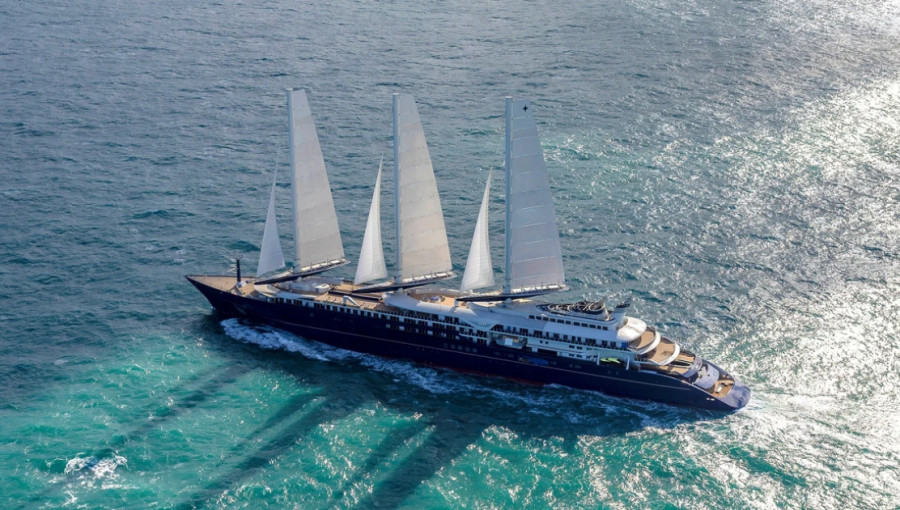
The Orient Express Corinthian has been officially christened in Saint-Nazaire, France, marking its debut as the world’s largest sailing cruise ship. Developed through a partnership between Accor and LVMH, the vessel serves as the flagship of the Silenseas class, blending the opulence of the legendary railway brand with cutting-edge maritime technology. Designed for sustainable luxury, the ship utilizes advanced rigid sail systems and hybrid power, offering an exclusive experience for 130 passengers while prioritizing environmental conservation through innovative engineering and AI-assisted marine protection.
The official naming ceremony took place at the Joubert graving dock, signaling a strategic expansion for the Orient Express brand from luxury rail travel to the high seas. Following the company’s recent project to restore historic 1920s carriages for its legendary Paris-to-Istanbul route, the Corinthian aims to replicate that era’s sense of discovery and elegance. Unlike the massive, resort-style vessels that dominate the modern cruise industry, this sailing ship focuses on a high-end, intimate atmosphere reminiscent of the interwar period’s "Golden Age" of travel.
Technologically, the vessel represents a significant leap in naval architecture. It features the SolidSail propulsion system, which consists of three rigid sails manufactured from a combination of glass fiber, carbon, and epoxy resin. These sails are managed by the AeolDrive system, allowing the masts to rotate 360 degrees for optimal wind capture. To ensure the ship can navigate under bridges, the masts are designed to tilt up to 70 degrees. This entire process is automated through computer-controlled servo motors, removing the need for manual sail handling.
Environmental efficiency is a core component of the ship's design. When wind conditions are insufficient, the Corinthian relies on a hybrid liquefied natural gas (LNG) power plant to minimize CO2 emission levels. The vessel is also engineered for future compatibility with hydrogen power. It can reach speeds of 31.5 kilometers per hour under engine power and 22.2 kilometers per hour using only its sails in 37 kilometer-per-hour winds.
Further green initiatives include an AI-assisted detection system designed to prevent collisions with whales and other marine mammals. Additionally, the ship utilizes a sophisticated positioning system that allows it to remain stationary without dropping anchor, preventing damage to the seabed in sensitive ecological zones.
The interior of the Orient Express Corinthian is designed for extreme comfort rather than mass capacity. The ship features 54 luxury suites and carries 170 crew members to serve a maximum of 130 guests, ensuring a high level of personalized service. According to Accor Chairman and CEO Sébastien Bazin, the vessel represents a successful fusion of industrial innovation and French craftsmanship, offering a unique "slow travel" experience for an international clientele.