Renewables 2024 Report

The International Energy Agency's (IEA) Renewables 2024 report provides a comprehensive analysis and forecast of renewable energy deployment across electricity, transport, and heat sectors through 2030. It tracks progress toward the COP28 goal of tripling global renewable capacity, emphasizing policy-driven advancements that have made renewables cost-competitive with fossil fuels. For the first time, the report includes a dedicated chapter on renewable fuels, such as bioenergy, biofuels, biogases, hydrogen, and e-fuels, assessing their potential in decarbonizing industry, buildings, and transport. It also examines trends in solar PV and wind manufacturing, technology costs, electrolyser capacity for hydrogen, and system integration challenges like grid queues.
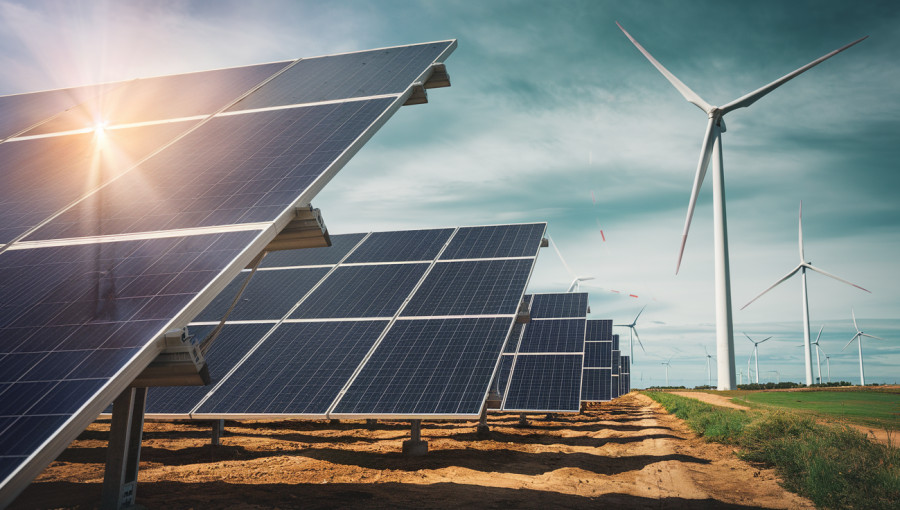
Under current policies and market conditions, global renewable capacity is projected to grow 2.7 times by 2030, reaching 5,500 GW and surpassing national ambitions by 25%, though falling short of the tripling target. Solar PV and wind dominate, accounting for 95% of additions, with solar PV alone driving 80% of growth due to falling costs and supportive policies. China leads, contributing 60% of global expansion and exceeding its own targets early, while the European Union, United States, and India accelerate deployment through tax credits, auctions, and corporate agreements. Hydrogen from renewables remains minor, representing just 4% of total hydrogen production and less than 1% of new renewable capacity.
Achieving the tripling goal—nearly 11,000 GW by 2030—is feasible in an accelerated scenario with policy enhancements, such as faster permitting, grid investments, and risk reduction in emerging economies. Challenges include high financing costs, weak infrastructure, and increasing curtailment from variable renewables, potentially reaching 5-15% in some countries without more flexibility measures like storage and demand response. The report urges stronger NDCs in 2025, contract renegotiations for fossil fuels, and focused attention on grid integration to ensure renewables comprise nearly half of global electricity by 2030.