
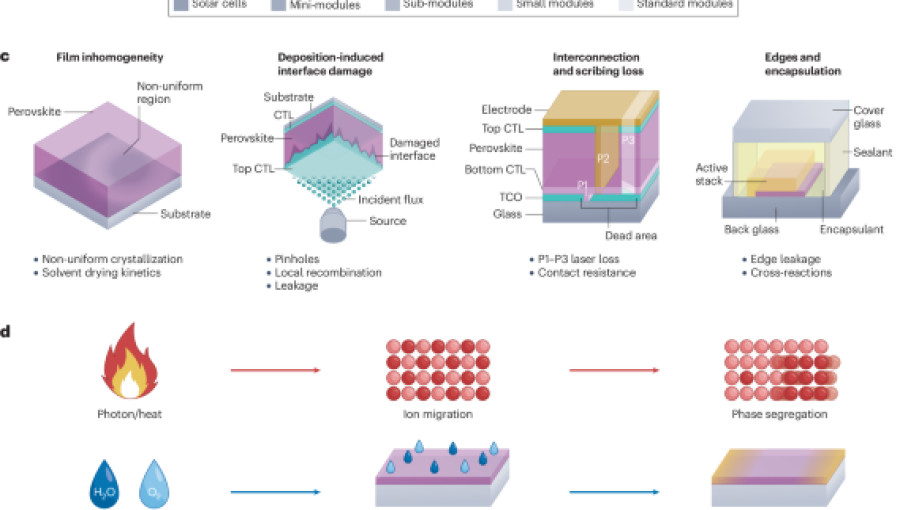
Perovskite photovoltaics have achieved significant efficiency milestones, yet their transition from laboratory research to commercial products faces persistent challenges regarding scalability, reliability, and manufacturing economics. The industry is shifting its focus from merely increasing cell efficiency to addressing the complex requirements of mass production, including supply chain stability, standardized testing, and factory-level yield. To succeed, the sector must prioritize manufacturability and long-term operational stability as core design variables. By integrating these factors into a cohesive value chain, perovskite technology can move beyond record-setting prototypes toward becoming a credible, bankable solution for global energy markets.
The current landscape for perovskite photovoltaics is defined by a plateau effect, where incremental gains in laboratory-scale efficiency offer diminishing returns without simultaneous improvements in production throughput and factory economics. Experts emphasize that investment decisions should no longer rely solely on small-area cell performance. Instead, stakeholders must prioritize technology readiness levels, manufacturing maturity, and warranty-compatible reliability data. Treating capital expenditure, yield, and learning curves as fundamental design constraints—rather than downstream optimization issues—is essential for achieving gigawatt-scale production.
Regional industrial strategies are also playing a critical role in shaping the commercialization path. China’s vertically integrated model contrasts with the more fragmented ecosystems found in the United States and Europe, influencing how and where these technologies reach scale. While single-junction perovskite modules are finding early success in specialized sectors like agrivoltaics, aerospace, and building-integrated photovoltaics, high-efficiency perovskite-silicon tandem architectures remain the primary focus for mass-market adoption. Future research must continue to address resource constraints, recyclability, and the development of robust supply chains to ensure the long-term viability of perovskite solar modules.