Physicists Set New Record For Ambient Pressure Superconductivity
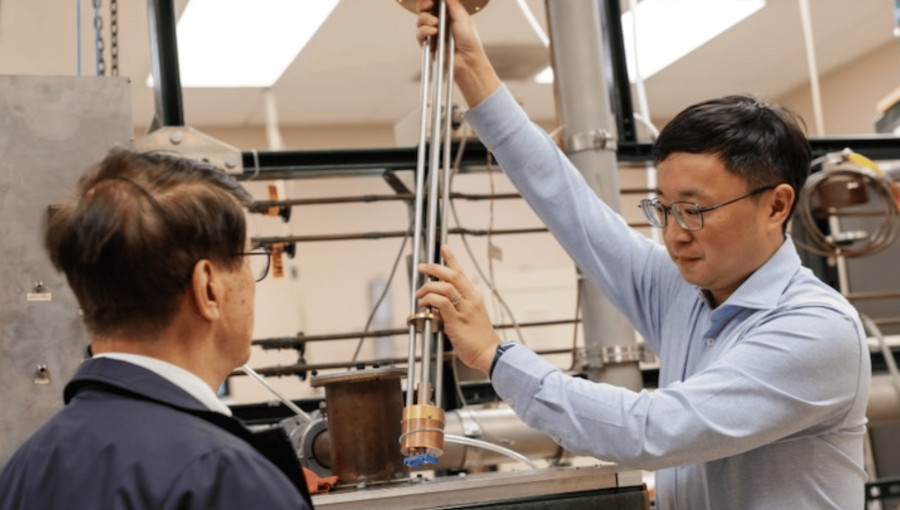
Physicists at the University of Houston have achieved a significant breakthrough in superconductivity, setting a new record for the highest temperature at which a material can conduct electricity without resistance under ambient pressure. By utilizing a specialized "pressure quenching" technique, the research team developed a material that maintains its superconducting properties at 151 Kelvin (-122 degrees Celsius). This advancement brings the scientific community closer to the goal of room-temperature superconductivity, which could revolutionize global power grids, drastically reduce energy waste, and minimize the environmental footprint of electricity transmission.
Researchers at the Texas Center for Superconductivity (TcSUH) have successfully developed a material that functions at 151 Kelvin under normal atmospheric conditions. For over a century, the pursuit of zero-resistance electrical conductivity has been hindered by the requirement for extreme, impractical cooling. While the new record of -122 degrees Celsius is still far from the warmth of daily life, it represents a major leap toward making superconducting technology commercially viable for infrastructure and consumer electronics.
The current global energy infrastructure faces significant efficiency challenges, with approximately 8% of electricity lost during transmission due to resistance. This resistance converts electrical energy into wasted heat, representing a massive economic and energy drain. According to Ching-Wu Chu, a physics professor and the lead author of the study, eliminating these losses could save billions of dollars and significantly reduce CO2 emissions by lowering the overall demand for power generation.
The breakthrough was achieved through a specialized process known as "pressure quenching," a method traditionally associated with the creation of synthetic diamonds. The team initially subjected the material to intense pressure to enhance its conductive properties. While maintaining this pressure, they cooled the material before abruptly releasing the physical stress. This sequence "locked" the superconducting state into the material’s structure, allowing it to remain effective even after the external pressure was removed.
Historically, reaching high-temperature superconductivity often required maintaining crushing levels of pressure, making the materials impossible to use in practical, real-world settings. Professor Chu noted that while other researchers have achieved room-temperature superconductivity under extreme pressure, his team’s method proves that it is possible to retain that state without maintaining such constraints.
Despite the progress, a gap of approximately 140 degrees Celsius remains before the technology reaches true room temperature. However, the research team remains optimistic that further refinements to the pressure quenching process will eventually lead to a material that functions in everyday environments. Such a development would not only transform the electrical grid but also pave the way for ultra-fast electronics, more efficient energy storage systems, and advanced medical imaging technology.