Redwood Materials Expands Second Life Battery Storage Operations
Redwood Materials is significantly expanding its second-life battery energy storage operations following the discovery that used electric vehicle battery packs are of much higher quality than previously estimated. The US-based recycling and materials firm is shifting its focus from processing manufacturing scrap to repurposing entire battery packs for stationary storage. With multiple gigawatt-hours of inventory already cleared for use, the company aims to deploy large-scale projects across utility, industrial, and data center sectors, maximizing the lifecycle of battery components before they undergo final recycling.
Redwood Materials has reported a surprising trend in the quality of incoming feedstock that is reshaping its business strategy. Claire McConnell, Vice President of business development for the company’s energy storage division, noted that the condition of returned electric vehicle battery packs has consistently exceeded initial projections. This development is accelerating the company's efforts to deploy massive second-life battery energy storage systems (BESS).
Historically, the majority of the material received by Redwood consisted of manufacturing scrap from battery production. However, over the past 18 months, the volume of full EV battery packs has surged. McConnell explained that these packs often retain significant capacity, making them ideal for stationary energy storage rather than immediate dismantling. This allows the company to extract maximum value from the batteries by using them for grid support before they are eventually processed for raw material recovery at their true end-of-life.
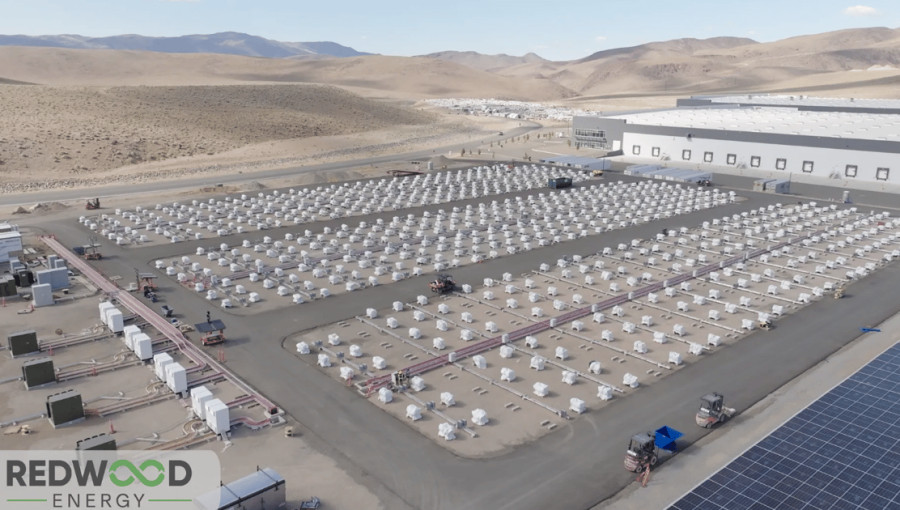
The company has already made significant strides in this sector, highlighted by a 12MW/63MWh project in Texas. This installation is currently recognized as one of the largest second-life BESS projects globally. By utilizing these repurposed units, Redwood is creating a more sustainable loop that extends the functional life of battery technology and reduces the overall carbon footprint of energy storage solutions.
Looking ahead, Redwood Materials plans to scale these operations to reach the gigawatt-hour level in the coming years. The company currently holds an inventory of multiple GWh of approved battery packs and is targeting a wide range of applications, including renewable energy integration, data centers, and utility-scale grid support. This strategic pivot highlights a maturing market for used EV components, where the transition from vehicle use to stationary storage is becoming a key pillar of the circular economy.