Renewable Energy Financiers Tackle Negative Pricing Challenges in Paris
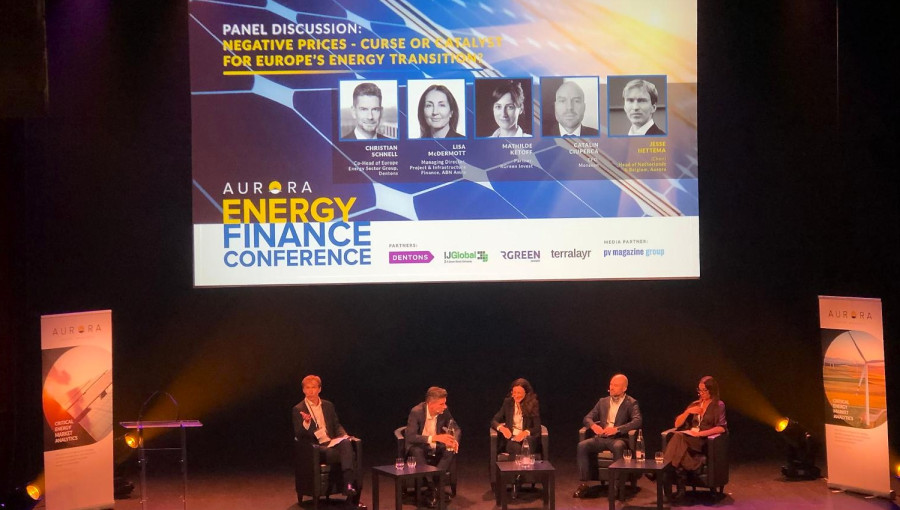
During the recent Aurora Energy Finance 2025 conference held in Paris, renewable energy financiers gathered to explore new investment strategies amidst rising market volatility, including the trend of negative pricing. As renewables dominate the energy landscape, traditional business models are being challenged, prompting a reassessment of risk management practices among lenders, developers, and policymakers. The shift towards flexible assets, particularly storage solutions, is highlighted as key to navigating this evolving market.
A significant issue for the industry is the adaptation of project financing models to account for the increasing frequency of negative pricing. Lisa McDermott, Managing Director at ABN Amro, emphasized that previously financed assets were based on different market conditions and understanding. To counter this challenge, project business models now need to incorporate negative pricing directly. While power purchase agreements remain vital, their formats must evolve to ensure that risk is equitably distributed among parties involved.
Investment strategies are increasingly leaning toward revenue diversification, even in scenarios where returns might not be guaranteed. This evolution demonstrates a heightened level of sophistication within the sector, which now requires the integration of various factors to develop resilient investment portfolios. There’s a growing interest among investors in a new breed of independent power producers who can generate value not only through energy sales but also by adopting vertically integrated business models.
The value of energy storage projects is significantly influenced by the market dynamics in which they are implemented. For example, in Romania, legislation is prompting major firms like Monsson to pair battery investments with solar projects in anticipation of future grid congestion. Conversely, in markets such as France, the situation is less straightforward due to varying conditions within national grids and regulatory frameworks.
The upcoming European Grid Package aims to unify development and operational protocols across member states, which could enhance coordination within the energy system. Without this alignment, developers are likely to face the brunt of the risks associated with renewable energy growth. Currently, integrating battery storage with solar installations is gaining traction as a viable approach, although its profitability is inconsistent across different markets. Notably, co-located projects are performing better in Spain compared to Germany, where the market fundamentals present challenges.
Recent insights from Christina Rentell of Aurora Energy Research stress the importance of flexible financial modeling to effectively account for both favorable and adverse market conditions. As storage and asset flexibility become foundational elements of the green investment sector, addressing the complexities tied to their integration and operation remains a vital consideration for long-term financial success.