Renewables And Storage Eclipse Fossil Fuels In US
The United States is witnessing a massive shift in its power sector as renewable energy and battery storage begin to eclipse traditional fossil fuels. Recent data from the U.S. Energy Information Administration (EIA) reveals that in early 2026, clean energy sources accounted for over a quarter of the nation's total electricity generation. While solar, wind, and storage capacity expanded by more than 55 gigawatts over the past year, fossil fuels and nuclear power saw negligible growth of less than 1 gigawatt. Projections suggest this trend will accelerate further, with renewables expected to dominate nearly all new capacity additions through 2027.
According to the EIA’s latest "Electric Power Monthly" report, which includes data through January 31, 2026, renewable energy continues to claim a larger share of the American grid. In January alone, utility-scale solar generation grew by 16.4% compared to the previous year, while small-scale solar PV systems, such as residential rooftop installations, saw a 12.1% increase. When combined, the total output from solar energy rose by 15.3%. Other sectors also showed gains, with wind power increasing by 1.9% and geothermal energy by 2.0%. Notably, hydropower generation experienced a significant surge of 30.2%.
In total, renewable energy sources provided 25.1% of the country’s electricity in January 2026, marking an 11.5% increase over the same period in 2025. This growth stands in stark contrast to the performance of fossil fuels; electricity generated from coal fell by 12.8%, while natural gas generation dropped by 3.4%.
The shift is even more pronounced when looking at total installed capacity. Between February 2025 and January 2026, the U.S. added over 27,000 megawatts (MW) of utility-scale solar and 6,300 MW of small-scale solar. Solar energy now represents 16.75% of the nation’s total generating capacity. Battery storage also saw an explosive expansion, adding nearly 15,800 MW of new capacity. Combined, wind and solar now make up 29.24% of the total U.S. energy capacity.
By the end of January 2026, the total share of renewables in the nation's generating capacity reached 36.6% when including small-scale solar. During the same 12-month period, natural gas and nuclear power saw minimal growth, while coal and petroleum-based capacities actually declined. The net growth for fossil fuels and nuclear combined was just under 958 MW—less than 2% of the growth seen in the renewables and battery sectors.
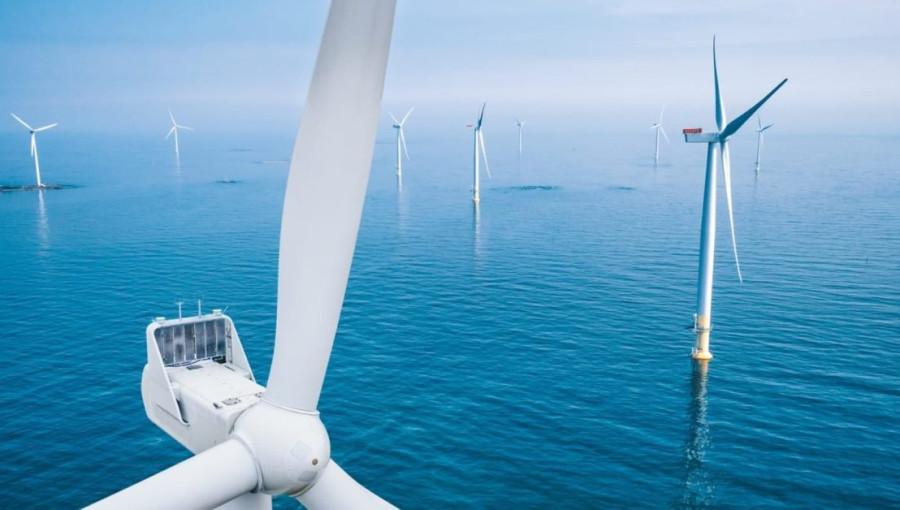
Looking ahead, the momentum for clean energy appears unstoppable regardless of the political climate. The EIA forecasts that by early 2027, an additional 41,552 MW of utility-scale solar will be brought online. Furthermore, battery storage capacity is expected to jump by nearly 44%, adding over 22,700 MW. Wind energy is also set for a major boost, with planned additions of 9,840 MW onshore and 4,155 MW offshore, which would more than double the previous year's growth.
Industry analysts note that while the current administration has expressed support for traditional energy, the economic transition toward solar, wind, and storage is accelerating. Projections for the coming year indicate that fossil fuel capacity will shrink by more than 4,200 MW, meaning that virtually all net new utility-scale capacity added to the U.S. grid will come from renewable sources and battery storage.