Renewables Beat Nuclear In Total System Cost
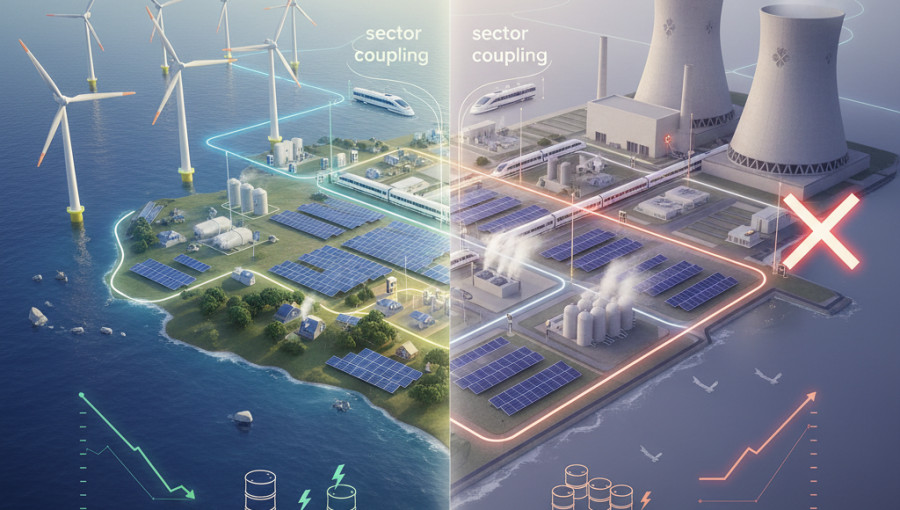
A comprehensive study led by Aalborg University researchers reveals that a combination of wind and solar power is significantly more cost-effective than nuclear energy when accounting for total system integration. Utilizing a new metric called System-based Levelized Cost of Energy (SLCOE), the research found that a least-cost renewable mix in a climate-neutral Denmark would cost approximately €46 per MWh. In contrast, nuclear power under identical conditions reached roughly €100 per MWh. The findings highlight how sector coupling and flexibility infrastructure drastically reduce the expenses associated with variable renewable energy sources compared to traditional baseload options.
The peer-reviewed study, published in the journal Energy, introduces the SLCOE metric as a more accurate alternative to the traditional Levelized Cost of Energy (LCOE). While LCOE focuses solely on the cost of generating a single unit of electricity, SLCOE incorporates the broader expenses of integrating that technology into the national grid, including storage, grid balancing, and sector coupling. According to the researchers, this holistic approach is essential because energy costs are heavily influenced by the specific system context in which a technology operates.
Using Denmark as a primary case study, the research team modeled both the current electricity-only infrastructure and a future climate-neutral system. In a future integrated energy landscape, a strategic mix of offshore wind and solar module installations emerged as the most economical path. While standalone solar power appeared expensive in isolation due to integration requirements, its cost dropped significantly when paired with wind power and supported by a flexible grid. Nuclear power, meanwhile, failed to enter the least-cost solution in any of the scenarios tested, even when researchers adjusted for various capital expenditure projections.
The study emphasizes that the primary driver for lowering renewable costs is sector coupling. This process involves linking the electricity sector with heating, transport, and industrial processes. By utilizing thermal storage, smart electric vehicle charging, and hydrogen production via electrolysis, the system can absorb the variability of wind and solar power more efficiently. These flexibility options are largely unavailable in traditional electricity-only grids, where nuclear power’s high capital costs and lack of flexibility become more pronounced.
The researchers also noted that their modeling utilized conservative assumptions for renewable energy. For instance, the study assumed a capital cost of €480 per kW for utility-scale solar by 2050, despite current market prices already hovering around €400 per kW. This suggests that the economic advantage of solar power may be even greater than the study indicates. Furthermore, the analysis did not include the long-term costs of nuclear waste management or the opportunity costs associated with the lengthy construction periods required for nuclear plants, both of which would further widen the price gap.
While the specific findings regarding wind dominance are tailored to the Danish climate, co-author Christian Breyer of LUT University noted that the principles apply globally. In "Sunbelt" regions such as Southern Europe, the Middle East, and India, the combination of low-cost solar cell technology and rapidly declining battery storage costs is expected to form the backbone of future energy systems. In all modeled scenarios for a carbon-neutral future, the integrated renewable approach consistently outperformed nuclear power on a total system cost basis.