Revolutionizing Solar: Oxford PV's Perovskite Technology Breakthrough

Solar energy is experiencing unprecedented growth and cost efficiency, being recognized as both a clean energy solution and a lucrative business opportunity. Despite the dominance of Chinese manufacturers producing extremely affordable panels, Oxford Photovoltaics (PV), a spinout from the University of Oxford, is pushing for a market entry with its advanced perovskite solar technology. The company's chief executive, David Ward, believes that as the solar energy landscape changes again due to increased efficiency technologies, there is room for new competitors. He emphasizes the significant efficiency advantages of perovskite technology while showcasing a pragmatic approach to collaboration with existing manufacturers.
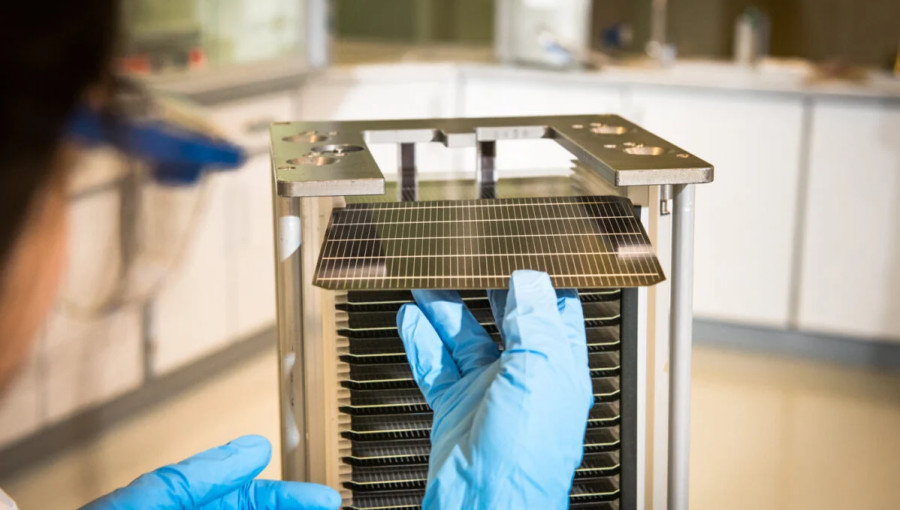
Founded in 2010 by physicist Henry Snaith, Oxford PV has been developing a groundbreaking material known as perovskite, which has the potential to revolutionize solar energy conversion efficiency. While the company has prepared its technology for market introduction, the solar industry has rapidly transformed, heavily influenced by Chinese companies like Jinko, Trina, JA Solar, and LONGi, which have outperformed European competitors by offering cheaper solar panels. This fierce competition has led to unprecedented demand and supply dynamics, with Chinese firms shipping around 320 gigawatts of solar panels last year, far exceeding predictions for global installations.
Ward acknowledges the market challenges but argues that the solar industry is on the brink of another transformation. He asserts that perovskite technology is crucial for enhancing solar panel efficiency beyond current silicon-based technologies, which have nearly reached their peak efficacy. The evolution of tandem solar panels, which combine perovskite and silicon to achieve efficiencies of up to 43 percent, represents a competitive frontier where Oxford PV aims to excel. Their recent record-holding tandem panel efficiency will be central to their strategy as they vie with major players for leadership in this next phase of solar innovation.
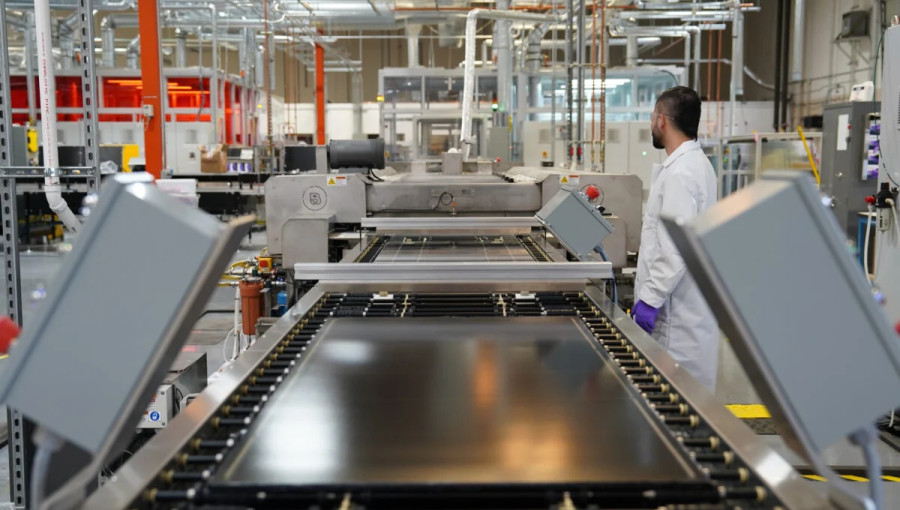
To further its mission, Oxford PV has manufactured pilot batches of its technology in Germany and has begun deploying its panels at large-scale solar farms in the United States. The company plans to establish a factory capable of producing 5GW of panels annually, with potential locations including the UK and other regions like the Middle East and India. Notably, Ward's strategy includes collaborating with industry giants like Trina Solar, which has signed a licensing agreement to produce and sell Oxford PV's products in China. This alliance reflects a practical approach to capturing market share in an increasingly competitive landscape.
As the solar industry faces economic fluctuations, such as changes to U.S. energy subsidies and shifting financial commitments, Ward remains optimistic about continued growth driven by falling technology costs. According to the International Renewable Energy Agency, new solar farms can now generate power at prices up to 41 percent lower than fossil fuels, showcasing the rapid evolution of the sector from higher costs just a decade ago. The changing investor landscape—where solar energy is now viewed as a sound business investment beyond just clean tech—further underscores the potential for ongoing success in solar energy.