Rocket Lab Unveils Silicon Solar For Space Computing

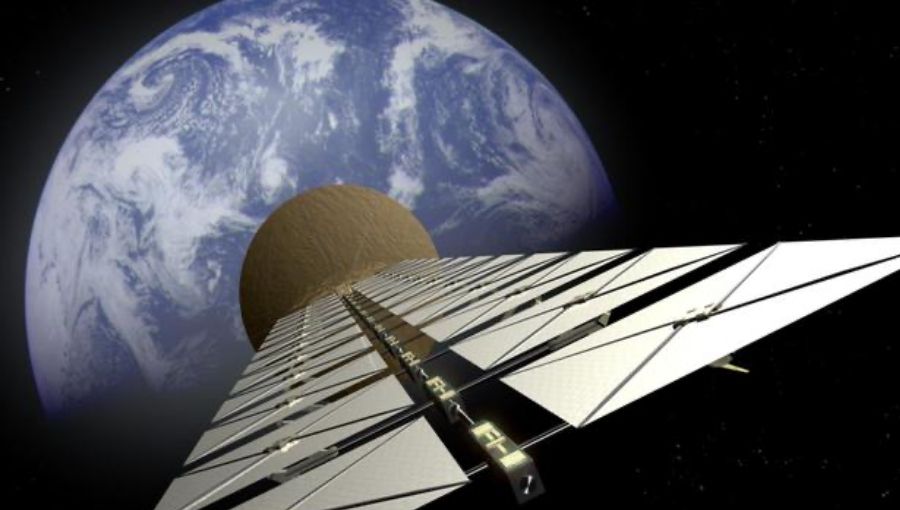
Rocket Lab has unveiled a new line of silicon solar arrays designed to power massive space-based data centers. These orbital facilities, which could span several kilometers, aim to solve Earth-bound constraints like land use and water consumption for cooling. By utilizing silicon instead of traditional rare minerals, Rocket Lab offers a scalable, cost-effective solution for gigawatt-class power generation. This development leverages the company's vertically integrated manufacturing and follows a $23.9 million CHIPS Act award to expand semiconductor production in New Mexico.
Rocket Lab, a leader in launch services and space systems, is addressing the growing demand for orbital computing by introducing advanced power solutions. As terrestrial data centers struggle with resource limitations and environmental footprints, the company is pivoting toward space-based infrastructure. These vast arrays, designed to extend over several kilometers in orbit, take advantage of limitless solar energy and the naturally cold environment of space to eliminate the need for the massive water-cooling systems required on the ground.
To achieve this industrial scale, the company is moving beyond traditional materials. While the satellite industry has historically relied on gallium arsenide and germanium for solar cells due to their radiation resistance, these minerals are increasingly subject to geopolitical supply chain risks. Rocket Lab’s new silicon solar arrays provide a mass-manufacturable and lightweight alternative. These modules are specifically engineered to be radiation-hardened and flexible, allowing them to be stowed and deployed efficiently for various orbital missions.
The company is also offering a hybrid solar array solution. This technology combines high-efficiency cells with silicon components, allowing mission planners to balance performance and cost. For missions where weight and size are critical, high-efficiency cells remain the priority; however, for mega-constellations and large-scale data centers, the silicon-based modules offer a more economical path to scalability.
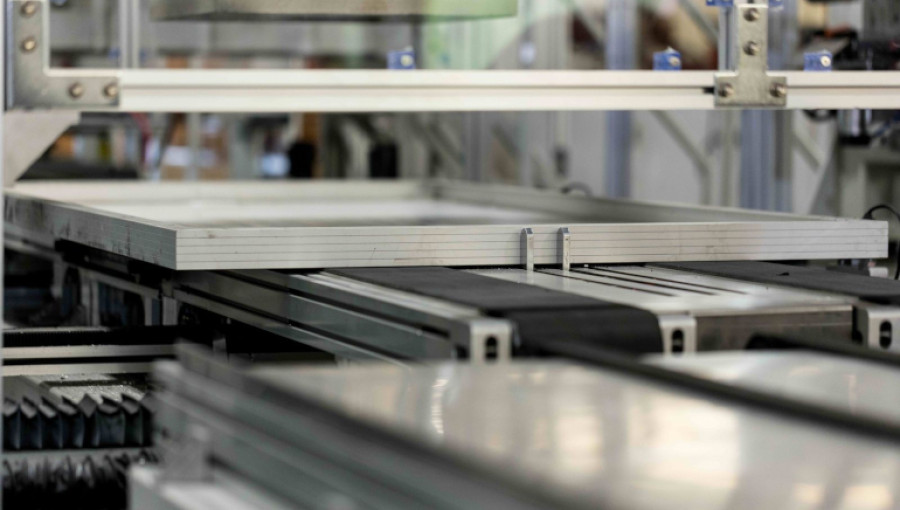
This expansion into silicon technology is supported by Rocket Lab’s vertical integration, where the company produces everything from individual solar cells and solar cell assemblies to entire solar panel wings and substrates under one roof. The initiative is further bolstered by a $23.9 million award from the U.S. CHIPS and Science Act, which is currently funding the expansion of semiconductor production at the company's Albuquerque facility.
Peter Beck, Rocket Lab’s founder and CEO, emphasized that reliable power systems are the foundation of the next frontier in computing. According to Beck, these arrays are built to handle the unique rigors of space while meeting the surging global demand for off-planet data storage and processing. Rocket Lab USA President Brad Clevenger added that space infrastructure has become as vital to the modern economy as traditional utilities, making secure, domestic production of these technologies a national priority.