
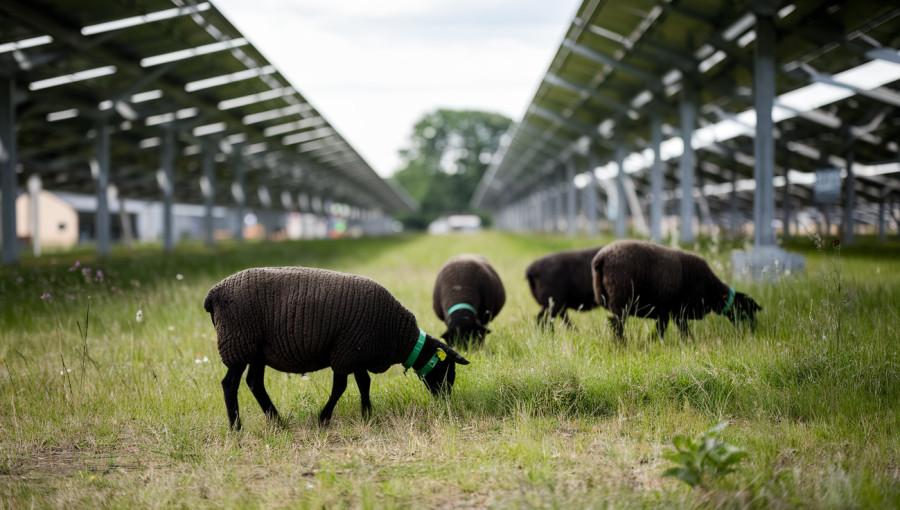
Solar companies are increasingly adopting sheep grazing as a sustainable alternative to gas-powered mowers for maintaining solar farms. This eco-friendly practice not only reduces emissions but also decreases upkeep costs by up to 20%. By utilizing sheep to manage grass and weeds around solar panels, farmers can generate new revenue streams while promoting healthier soil and biodiversity. As major companies invest in this innovative approach, the trend of solar grazing is set to grow, proving that renewable energy and agricultural practices can coexist harmoniously.
Forget roaring lawnmowers and fuel-guzzling tractors. Today’s solar companies are turning to flocks of sheep to trim grass and control weeds under solar panels. These eco-friendly grazers easily navigate narrow panel rows, cutting maintenance costs and carbon emissions at the same time. In fact, using sheep instead of gas-powered mowing crews can reduce upkeep expenses by up to 20 percent.
Sheep fit neatly between solar arrays, reaching into nooks that mechanical gear can’t. They chew rain or shine. And since sheep run on grass, not gas, their grazing helps reduce carbon emissions. Using these natural lawnmowers better aligns with solar’s green mission goals. Developers like SB Energy in Texas now rely on herds of around 3,000 sheep to cover thousands of acres, benefiting both their bottom line and the planet.
This isn’t your average landscaping story. There’s even a fancy word for it: agrivolatics, or the practice of combining solar energy production with agriculture. Farmers who jump on board aren’t just maintaining the lawn; they’re opening up multiple revenue streams. First, ranchers can lease land to solar companies, sign grazing contracts, while still earning from traditional farm products like wool and lamb. Chad Raines is a rancher from Texas. He decided to trade in cotton farming for sheep grazing on solar land. That move has paid off. Last year, he brought in around $300,000. If he had stuck with cotton, he estimates he would’ve lost about $200,000 instead. That’s a huge swing, and it’s a real-world example of how solar grazing is helping revive a sheep industry that had been stuck in neutral for decades.
Letting sheep do the mowing isn’t just about saving time or money. It actually helps the land. As they move through the fields, sheep naturally break down plant material, aerate the soil and leave behind fertilizing manure. This leads to healthier dirt and better carbon capture. Companies like Lightsource BP are already seeing those benefits. They manage over 14,000 sheep across solar farms that produce more than 3 gigawatts of power. These sites aren’t just power generators, they’re also habitats. Flowers that support bees and butterflies are planted among the panels, creating ideal conditions for pollinators. Some farms have even started producing honey thanks to the thriving bee population.
Enel North America recently signed one of the biggest solar grazing deals in the country. They’re deploying over 6,000 sheep across eight large solar farms, covering more than 10,000 acres. At some of those sites, the amount of organic matter in the soil has more than doubled. For solar operators, this approach just makes sense. It cuts operations and maintenance costs, strengthens environmental credibility and builds better relationships with nearby communities. Investors are paying attention, too. In just two years, the number of solar grazing projects has skyrocketed, especially in places backed by heavy hitters like DE Shaw and Berkshire Hathaway.
If you care about clean energy, sustainable farming or smart land use, solar grazing is worth watching. It shows how innovation doesn’t always require high-tech gadgets; sometimes, it just takes some sheep. For farmers and ranchers, this model opens the door to new income by partnering with solar companies. If you own land or work in agriculture, grazing contracts could provide a steady stream of revenue without giving up traditional operations. For everyone else, this trend offers hope that renewable energy can coexist with rural livelihoods, boost biodiversity and fight climate change, all at once. As solar farms expand across
https://www.foxnews.com/tech/solar-companies-deploy-sheep-across-farms-growing-green-energy-trend