Solar Panels Boost Crops Challenging New Alberta Ban

A new study highlights the significant agricultural benefits of installing solar panels over farmland, a practice known as agrivoltaics, which can increase crop yields. This research comes as new regulations in Alberta, Canada, effectively halt solar development on agricultural land due to concerns over land restoration. The findings suggest that the province’s policies may be overlooking a key opportunity to simultaneously boost food production and advance renewable energy goals, as the physical shading from solar arrays benefits crops even when the panels are not generating power.
Recent policy changes in the Canadian province of Alberta have put a stop to many solar farm projects, citing the need to protect agricultural land and prevent a repeat of the costly cleanup of abandoned oil and gas wells. The new rules prohibit solar installations on certain farmlands and compel developers to provide substantial upfront funding for future decommissioning. This has rendered many previously viable projects financially unfeasible, creating a significant roadblock for the renewable energy sector in the region.
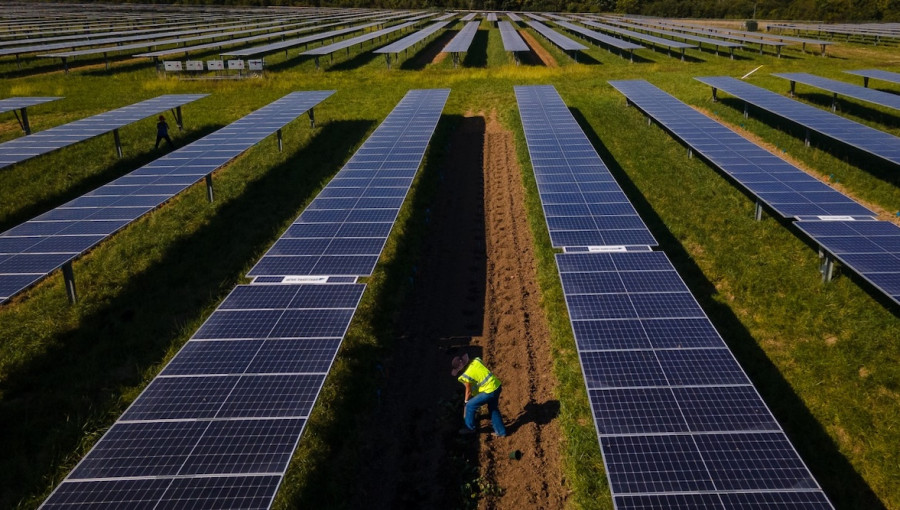
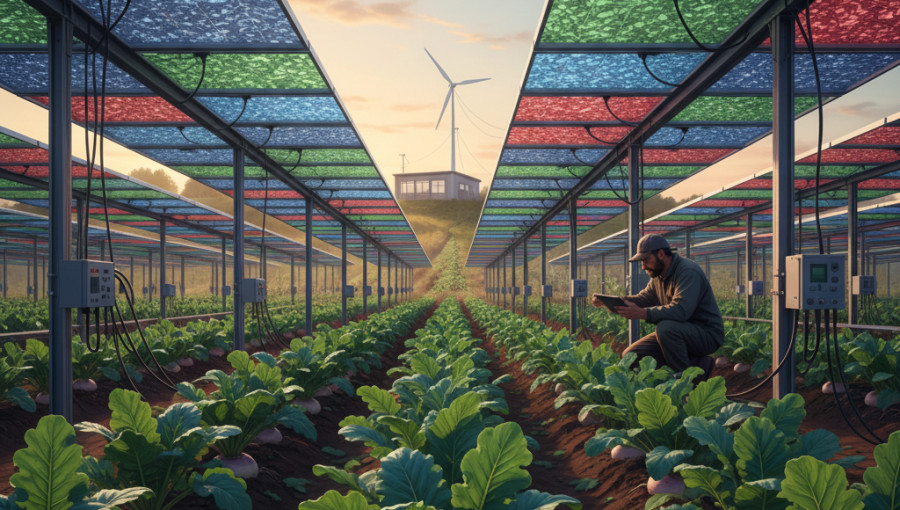
This policy shift clashes with a growing body of international research on agrivoltaics, the co-location of solar panels and agricultural crops. Studies have demonstrated that the partial shade provided by solar panels creates a beneficial microclimate, conserving soil moisture and shielding plants from excessive sun, wind, and hail. This protection leads to notable increases in yields for a wide variety of crops, including strawberries, lettuce, kale, potatoes, and tomatoes. The dual-use approach allows for the production of both food and clean energy on the same land, enhancing land-use efficiency and providing farmers with an additional revenue stream.
A recent study from Western University adds a critical dimension to this discussion, revealing that the agricultural advantages of agrivoltaics persist even if the solar panels are not producing electricity. By analyzing the microclimate under two different solar arrays, researchers found that the physical structure alone is sufficient to moderate temperatures and retain soil moisture. This discovery implies that the infrastructure offers inherent value to farmers through its shading effects, independent of its function as a power source.
The findings challenge the premise of Alberta's restrictive regulations. While the rules are designed to ensure land can be returned to its original state, they do not account for the ongoing agricultural value of agrivoltaic systems. Experts point out that Canada lacks a specific land-use classification for agrivoltaics, creating legal and financial uncertainty. They suggest that Canadian policymakers could learn from countries like France and Italy, which have developed legislation to support and regulate this innovative farming method, ensuring a balanced approach that benefits farmers, the energy sector, and the food supply.