Solar-Powered Device Turns Lunar Soil Into Vital Resources

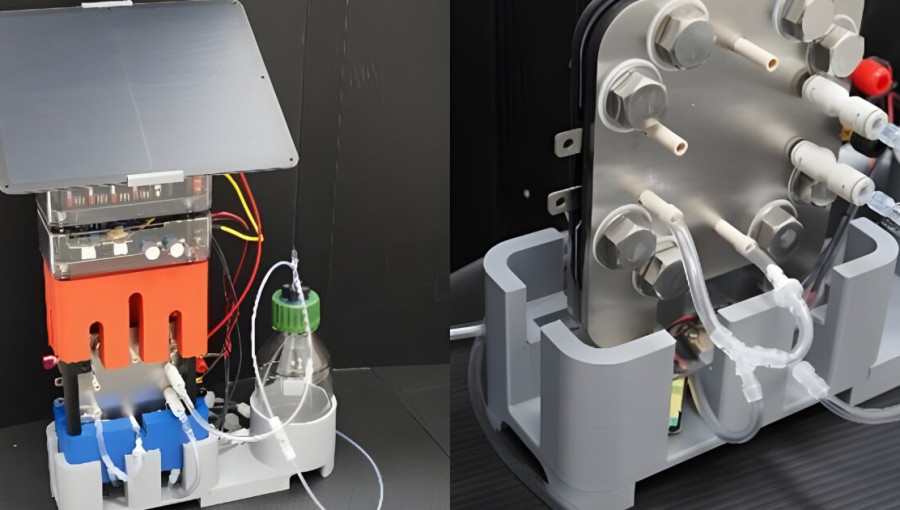
Researchers have developed a new solar-powered device capable of generating water, oxygen, and fuel from lunar soil, which is crucial for sustaining future colonies on the Moon. Unlike previous energy-intensive methods, this innovative reactor utilizes sunlight and carbon dioxide from astronauts' exhalations to extract water from lunar regolith. By catalyzing a reaction between the extracted water and carbon dioxide, the process produces valuable gases that can serve as fuel, while also yielding additional water for various uses.
The team, led by Lu Wang at the Chinese University of Hong Kong, conducted experiments using lunar samples from China's Chang’e 5 mission alongside simulated Earth-based regolith. The solar reactor employs sunlight to extract water, which then reacts with carbon dioxide present in the lunar environment, producing carbon monoxide, hydrogen, and oxygen. These gases can be harnessed for fuel, while the remaining water presents additional opportunities for utilization.
Wang highlights the challenges posed by the Moon's extreme conditions, including significant temperature fluctuations, low gravity, intense solar radiation, and vacuum levels. The diversity of lunar soil and limited carbon dioxide availability further complicate practical application. Notably, the mineral ilmenite found in lunar soil plays a critical role as a catalyst in this process. There exist concerns regarding the scalability of the technology to meet the needs of an entire lunar colony, emphasizing the complexities involved.
Wang shares their astonishment at the results of their integrated approach, noting its efficiency in harnessing lunar resources. The successful connection of lunar water extraction and photothermal carbon dioxide catalysis could significantly lower costs and streamline infrastructure development for future lunar missions.