Solar Sheep Grazing: Boosting Soil Health and Nutrition

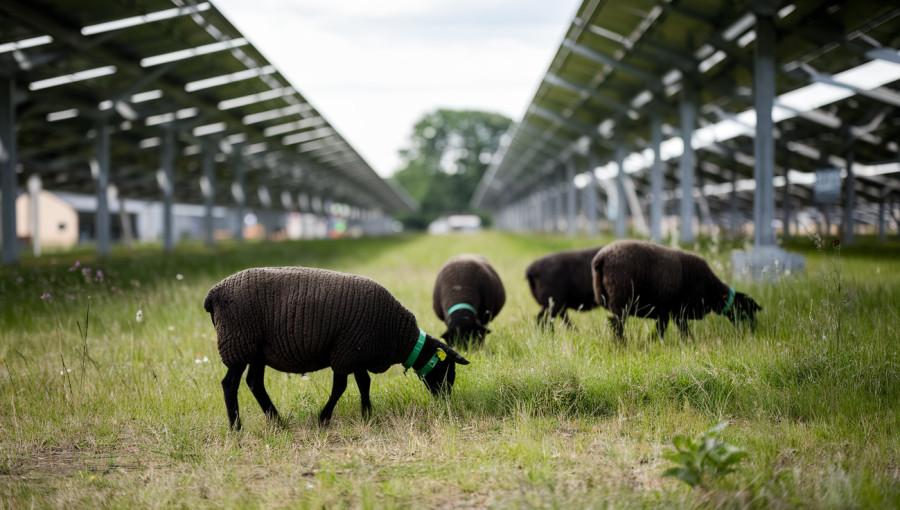
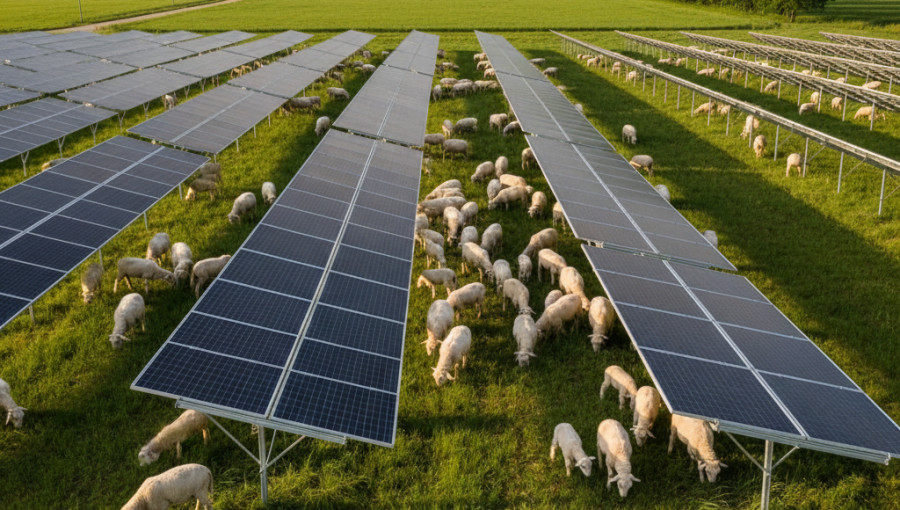
A recent study has highlighted the symbiotic benefits of solar sheep grazing, a practice merging solar energy production with sheep farming, showing improvements in both soil health and livestock nutrition. Conducted at Lightsource bp’s Nittany Solar project in Pennsylvania, the research focused on agrivoltaics—where agricultural activities occur on the same land as solar installations. The results revealed that grazing sheep on solar farms enhances soil quality through the natural fertilizing effects of manure and plant matter, while the solar environment provides better nutrition for the livestock. The study involved extensive ecological assessments, measuring soil carbon, compaction, and plant diversity, which indicated that solar grazing sites contained healthier soil with increased organic matter and improved vegetation.
The study, orchestrated by the American Solar Grazing Association (ASGA), also found that vegetation beneath solar panels exhibited higher protein content and digestibility, potentially due to the beneficial shading provided by the solar installations. Although the increase in pasture condition scores from 2022 to 2023 was not statistically significant, it suggests that solar grazing can sustainably improve site conditions over time. This research marks a notable contribution to the field of solar grazing and agrivoltaics, providing an essential foundation for future studies in the United States. Lightsource bp is committed to further evaluating the impacts of solar grazing and its implications for enhancing biodiversity and soil health in conjunction with energy production.